



Building a Mini Rugby Fives Court for Australian Schools
Rugby Fives is a fast, low-contact wall game that can fit neatly into a school’s physical education program. Players use their hands to strike a small ball against the front wall, with rallies developing through movement, anticipation and controlled placement. A compact court gives students access to the sport without requiring a full-sized specialist facility.
For Australian schools, a mini court can be built as a permanent structure, a temporary activity zone or a marked adaptation of an existing hard court. The right choice depends on available space, school enrolment, budget, weather exposure and whether the facility will serve one class or a wider community.
The original Rugby Fives court is enclosed by walls, but a school version can preserve the essential features on a smaller footprint. The front wall, playable rebound area, service line and safe run-off space matter more than reproducing every adult dimension exactly.
Before construction begins, speak with the school leadership team, grounds staff and relevant state or territory safety personnel. A clear plan should cover design approval, ball selection, supervision, storage, drainage, accessibility and future maintenance.
| Court option | Approximate footprint | Best use | Main advantage | Main consideration |
|---|---|---|---|---|
| Marked hard-court zone | 7–9 m long by 4–5 m wide | Introductory lessons | Lowest cost and fastest setup | Needs a suitable rebound wall |
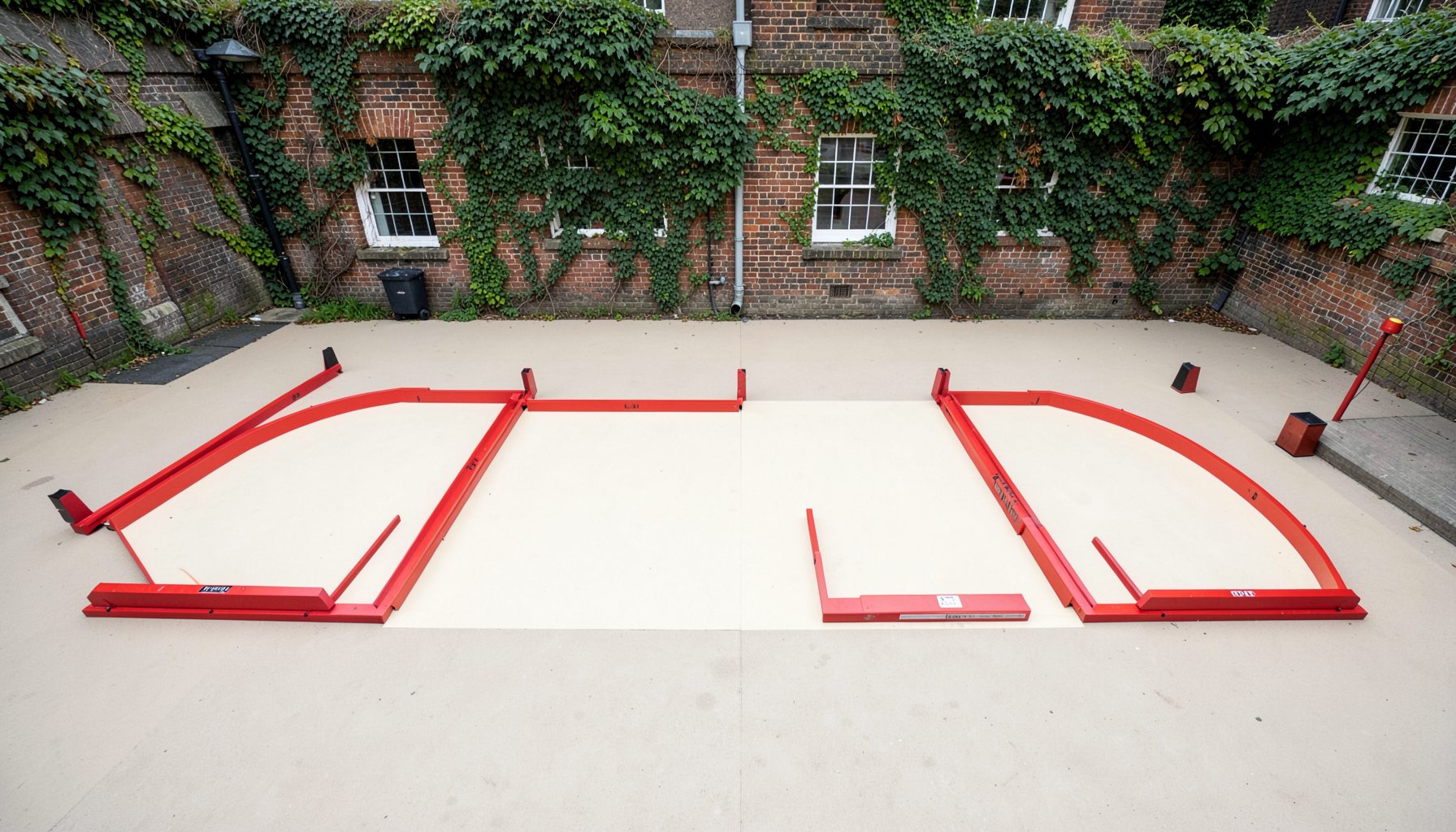
| Modular mini court | 8–10 m long by 5–6 m wide | Regular school sessions | Consistent playing conditions | Requires anchoring and storage planning |
| Permanent enclosed court | Based on a scaled full court | Clubs and competitions | Durable, authentic experience | Highest construction and compliance cost |
Choose The Site And Scale
A practical mini Rugby Fives court should be long enough for a player to move backwards safely while still reaching the front wall. For primary-aged children, a playing zone of approximately 7 metres by 4.5 metres can work well. Older students and regular school teams will benefit from something closer to 9 metres by 5.5 metres.
The surface should be level, firm and free from loose gravel, tree roots or drainage grates. A disused tennis-court corner, basketball half-court or covered multipurpose area may provide a strong starting point. In Melbourne, where winter rain can interrupt outdoor sport, a covered court can extend the teaching season. In Brisbane or Darwin, shade and airflow may be more important than enclosure.
Leave a clear buffer around the court rather than placing it directly beside a fence, wall or spectator area. Young players often chase the ball beyond the marked lines. A minimum run-off zone of about 1.5 metres is a sensible design target, with additional space wherever the court meets a hard boundary.
Build The Rebound Wall
The front wall is the central feature of the court. It must offer a predictable rebound without sharp edges, exposed fixings or unstable panels. A masonry wall, reinforced concrete panel or purpose-built sports rebound system can all work when engineered and finished for school use.
For a mini layout, a front wall around 3.5 to 4.5 metres high is usually enough for teaching basic striking and returning skills. A lower wall may suit younger children, while a taller wall gives secondary students more room to develop higher defensive shots. The playing face should be smooth, matte and strong enough to withstand repeated impacts.
If a full wall is impractical, a modular rebound board can be installed against a structural frame. It should be securely anchored and checked for movement before every session. Avoid lightweight domestic fencing, temporary signage or ordinary plywood exposed to rain, as these can flex, splinter or produce inconsistent rebounds.
Use contrasting colours to help students see the target area. A lighter rebound face against a darker surrounding wall makes the ball easier to track, particularly in an outdoor court affected by glare. Rounded protection around corners and a sealed junction at the wall-floor edge will simplify cleaning and reduce injury risks.
Mark Lines And Define The Rules
A mini court does not need every line used on a full competition court, but it should have clear boundaries. Mark the front wall, side limits, rear boundary and service line with durable outdoor paint or thermoplastic markings. Keep the layout simple enough for a teacher to explain in under a minute.
A service line positioned roughly halfway between the front wall and rear boundary gives students a useful starting point. Beginners can serve from a designated box or floor marker before progressing to formal service rules. Coloured cones or removable spots are helpful during early lessons, especially when a single area must support several activities.
The Rugby Fives Association can help schools connect their modified court to recognised playing methods, coaching resources and competition pathways. Teachers can begin with cooperative rallies, then introduce scoring, court positioning and tactical targets. The same space can support singles, pairs, rotation games and small-sided challenges.
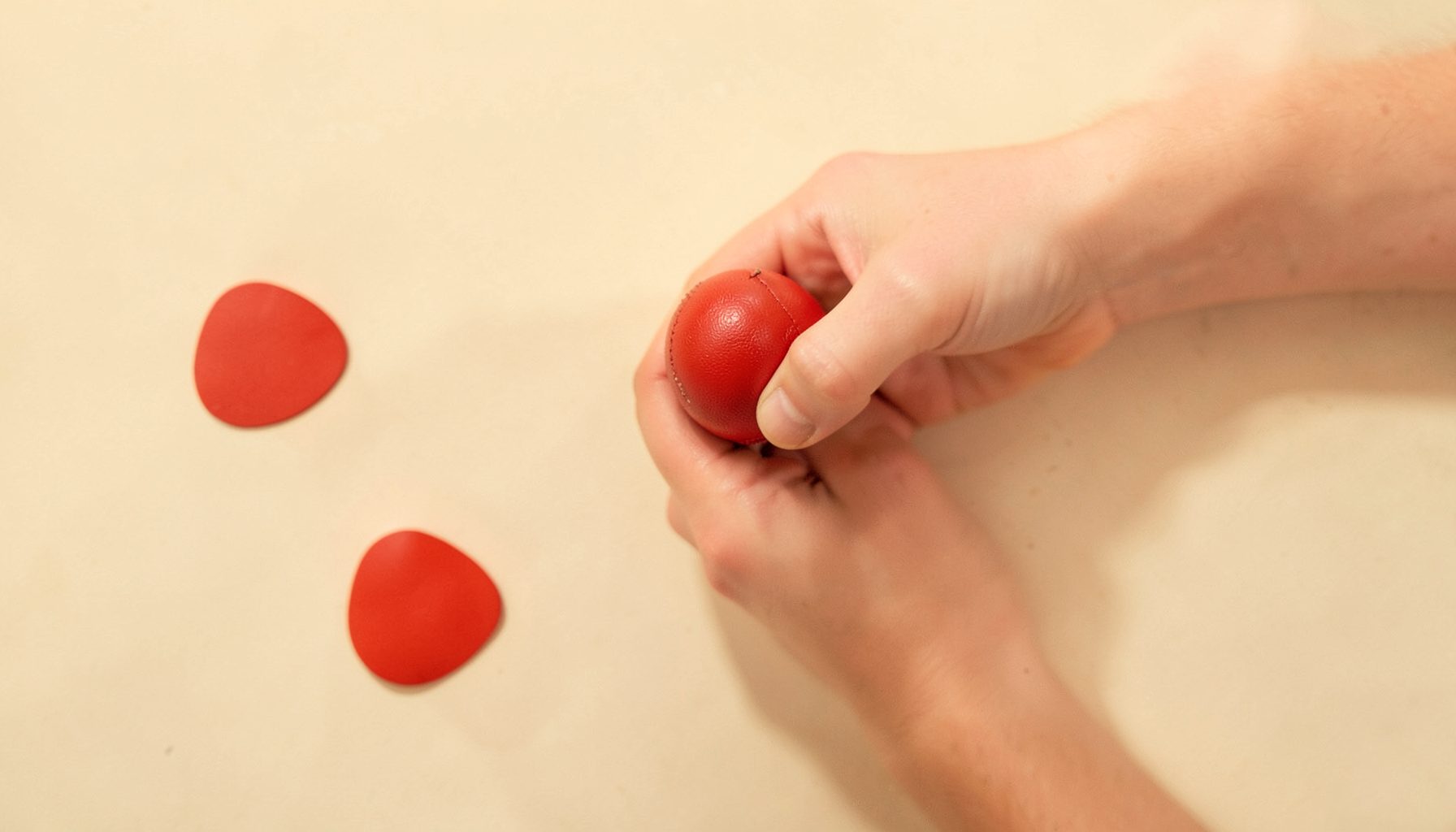
Use soft or low-bounce balls at first. They slow the rally and give younger pupils more time to judge the rebound. Progressively faster balls can be introduced as students gain confidence. In Australia, keeping several ball types in a labelled equipment tub helps staff adapt sessions for different age groups without rebuilding the activity.
Plan For Safety And Inclusion
Court safety starts with the surrounding environment. Inspect the surface for cracks, standing water and slippery coatings, and check that no protruding bolts or brackets are within reach. A pre-session checklist should include the wall, anchors, boundary area, lighting and ball condition.
Players should wear enclosed athletic shoes with suitable grip. Hand protection is not normally required for basic play, although schools should follow the advice of their governing body and risk-assessment procedures. Students need clear instructions about spacing, waiting behind the rear line and calling for a ball before entering another player’s path.
A mini court can be adapted for a wide range of abilities. Lower targets, larger slow balls, shorter distances and partner formats allow students with different coordination levels to participate. A student who cannot cover the full court may act as a target player, feeder or tactical caller before moving into more active roles.
Sun exposure deserves particular attention in Australian schools. Schedule outdoor sessions outside the harshest midday period where possible, provide shaded rest areas and make water breaks routine. In Western Australia and South Australia, dusty conditions may require more frequent surface cleaning, while coastal schools should inspect metal components for salt corrosion.
Manage Cost, Maintenance And Use
The cheapest approach is usually to mark a court beside an existing rebound wall, provided that wall is structurally appropriate and safe. A school may then spend its budget on line marking, balls, storage, teacher training and shade rather than major construction. This model is useful for trialling Rugby Fives before committing to a permanent facility.
A modular court costs more but can serve schools that share campuses, operate on leased grounds or need flexible programming. Select panels and frames rated for outdoor conditions, and specify how they will be secured during strong winds. In regional areas, transport, trades availability and replacement-part lead times should be included in the budget from the beginning.
Maintenance should be straightforward: sweep grit from the playing surface, wash off mud, inspect fixings and repaint worn lines. Schedule a formal inspection each term and a more detailed review after storms or school holidays. Record faults so teachers know whether the court is open, restricted or awaiting repair.
A good facility should earn its space throughout the week. Use it for PE classes, lunchtime activities, interschool fixtures, coaching sessions and community programs. Clubs in Sydney, Canberra and other Australian centres can provide a pathway for interested students, while school carnivals can introduce the game without requiring advanced equipment. Players returning from tournaments may also benefit from structured recovery guidance, including these tournament recovery tips.
A mini court becomes most valuable when it is treated as a long-term teaching resource rather than a single construction project. Start with a safe, visible design, involve students in learning the rules and maintain a regular calendar of sessions. Schools can then contact the Rugby Fives Association for guidance on coaching, local connections, competitions and ways to develop the facility as participation grows.