
Build a Rugby Fives Court on a Realistic Budget
Rugby Fives packs the movement, passing and decision-making of rugby into a compact five-a-side game. Most grassroots pitches use a 40 by 20 metre playing rectangle, making a community-scale project realistic. A sensible budget comes from choosing the right surface first, then spending on drainage, safe goals and durable markings.
Australian clubs often work with limited volunteer time, council-controlled ovals and school facilities. A Parramatta school or an Adelaide recreation reserve may already provide much of the space needed. Check ownership, public liability, maintenance duties and approval requirements before drawing a final layout.
The cheapest-looking option can become expensive when irrigation fails, the surface breaks up or portable goals cannot be secured. Think like a mate organising a community build: ask local tradies for itemised quotes, buy in bulk and count volunteer hours as a real contribution rather than pretending the project is free.
A phased build lets a club test demand, raise funds and improve one component at a time. It also keeps participation broad, with school students, casual players, women, older athletes and people with disability able to use the same facility. Start with a safe temporary court if necessary, then reinvest gate income and grants into a permanent surface.
Set the footprint and site
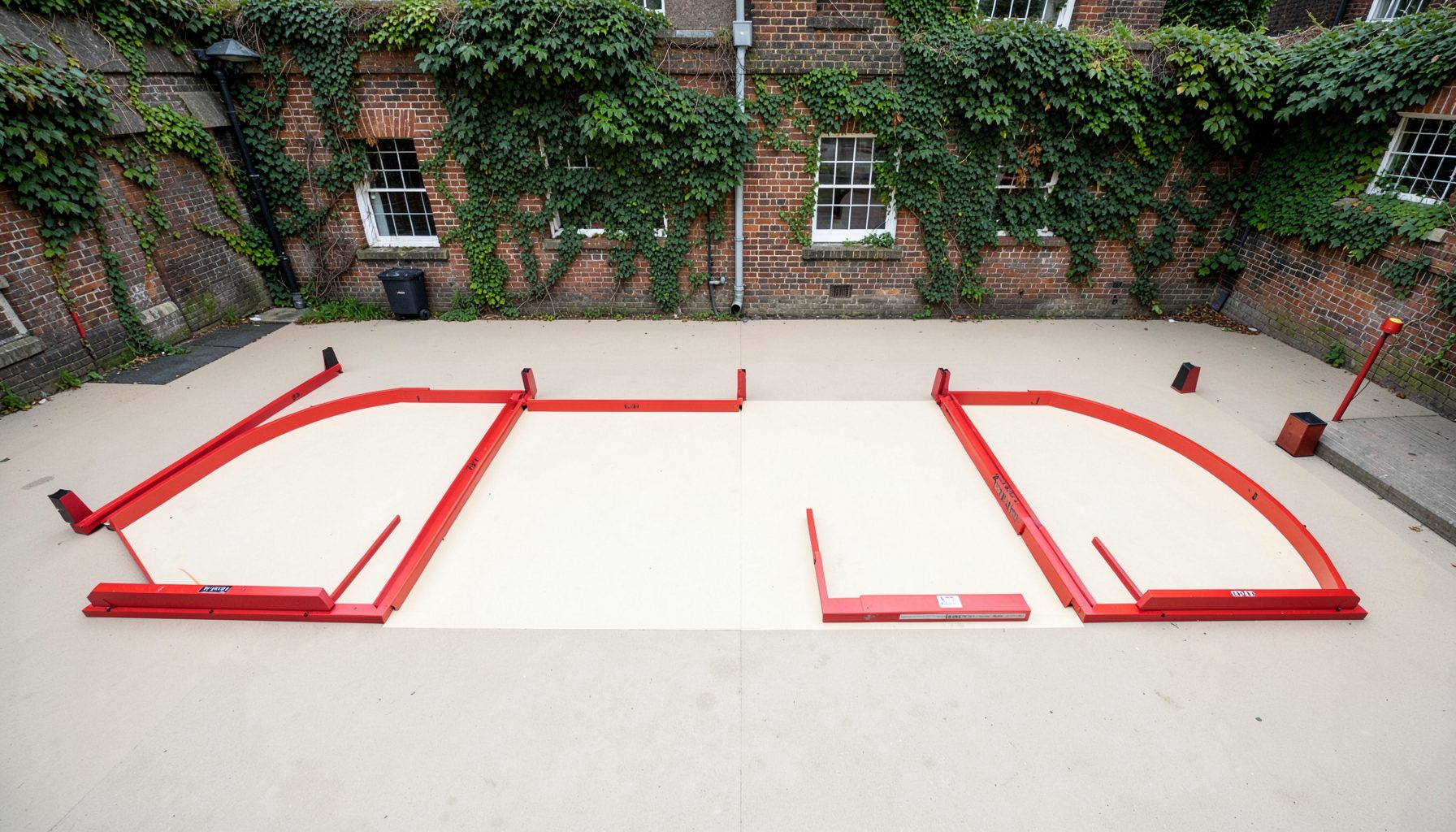
Confirm the footprint and competition rules before ordering materials. Most local competitions use a 40 x 20 metre rectangle, but check current fixture requirements first. Add a generous safety run-off outside the touchlines and behind portable posts, and ensure trees, fences, spectators and camera positions do not intrude.
Secure a site agreement before committing cash. The owner may require an insurance certificate, agreed community-use hours, annual inspections or a contribution to future resurfacing. At a council oval, ask which department handles leases and whether club volunteers can maintain the area or a separate contractor must mow and mark it.
Choose a surface that fits local use
Existing natural grass is often the cheapest route at a school or cricket oval. Upgrade drainage, level bare patches and choose a hard-wearing grass mix suited to local rainfall. It stays comfortable for running, but wear can be heavy at popular training times, so a maintenance plan matters as much as the installation quote.
Rubberised synthetic and hardcourt systems last longer and support wet-weather fixtures, yet their upfront cost is much higher. A well-used synthetic court should be funded as a shared regional asset, perhaps through a council, school and club partnership, rather than as a small club’s minor purchase. Include line removal, repairs and eventual renewal in the financial comparison.
Compare costs for Australian conditions
Heat and intense sunlight can harden turf and damage line paint, while summer storms can undermine a new base. Specify good drainage, a slight fall away from fenced areas and materials rated for strong UV. Brisbane’s humid summers and Melbourne’s cooler, changeable conditions require different establishment and irrigation schedules.
Check soil, depth and site access with a contractor before assuming the surface is ready. Compact the base evenly, repair edges and keep machinery outside the run-off. Use council-approved edging to prevent loose stone becoming a hazard, and preserve mature trees where possible. A specialist inspection can prevent failed drainage and uneven play.
For an indicative 800-square-metre playing area, Australian project ranges vary widely according to access and ground conditions. These broad figures exclude major earthworks and assume quotations in Australian dollars including GST.
| Surface route | Rough project range | Where it works best | Main trade-off |
|---|---|---|---|
| Activate existing grass | $3,000–$20,000 | School ovals and reserves with sound drainage | Closures, wear and irrigation |
| Rebuild natural turf | $15,000–$60,000 | Clubs expecting frequent local use | Seasonal conditions and regular maintenance |
| Install synthetic | $100,000–$250,000+ | Multi-user or year-round competition sites | High capital cost and specialist renewal |
| Resurface a hard court | $25,000–$90,000 | Existing tennis, basketball or netball courts | Cracks, drainage and line compatibility |
Mark lines and install goals
Use temporary or semi-permanent markers on natural grass. For synthetic or hard surfaces, use approved, non-toxic line paint applied by someone familiar with the material. Portable markers must sit outside the running area, remain visible after rain and never create a trip hazard. Confirm the required goal-line and touchline layout under the current competition rules.
Do not improvise goal bases from unrestrained concrete blocks. Lightweight aluminium or high-density polyethylene uprights with broad, fillable bases are easier for volunteers to manage and safer when knocked. Add sand or water to the bases, inspect bolts before every session and remove damaged equipment from play. A robust storage plan also prevents portable goals from becoming an insurance issue.
Safe use begins before the ball is passed. Coaches should pair a dynamic club warm-up with suitable mobility work; the online yoga sessions can offer a low-impact starting point for players who need more time to prepare. Clear signage should identify surface rules, hydration points and the person responsible for equipment checks.
Pool money, labour and buying power
Build a simple budget showing quotes, permits, drainage, goals, line marking, installation, insurance and a maintenance reserve. Seek local council community grants, state sport grants, school capital funds and charitable trust support. Grant rounds often open at different times, so start with a realistic project schedule. Sponsors may value visible community involvement more than a large cash donation.
Ask for written quotations against identical specifications, including delivery, installation, GST and warranty. Buy standard line markers, cones and base weights together to reduce freight, and borrow a roller, scaffold or compacting plate from a friendly club rather than hiring each item. A working bee can move gravel and prepare lines, while trained contractors should handle electrical work, structural footings and traffic-control tasks.
Launch, maintain and build participation
Begin with a temporary layout on an approved surface, run several training sessions and record damage, noise, parking and peak-use problems. This evidence helps sponsors and councils see genuine demand. Set a target for permanent works only after checking whether nearby junior clubs, schools and community teams would share the schedule and cost.
Budget for mowing, irrigation, repainting, rubbish removal and safety checks. For synthetic surfaces, appoint an experienced cleaning contractor and avoid dragging or driving heavy vehicles over the field. Review the first six months of use, then adjust maintenance frequency. If the club has a spare court, rotate training and competition so wear does not concentrate in one area.
The Rugby Fives Association, the UK’s national governing body and registered charity, maintains competition, coaching and community development resources. Clubs can ask about governance templates and wider participation contacts through contact the association. Appoint a project lead today, record the agreed site and budget, request three comparable quotes, and place the first working-bee date on the calendar with the council, school and club contacts confirmed.