


Building a Reliable Rugby Fives Match-Day Routine
A well-designed pre-match routine helps Rugby Fives players arrive ready to move, react, and compete with a clear mind. It should prepare the body for rapid changes of direction, the hands for accurate striking, and the mind for the demands of singles or doubles play.
The best routine is practical rather than elaborate. It should fit around travel, court access, tournament schedules, and the time available before a fixture. Repeating the same essential steps gives players a dependable framework while leaving room to adapt to different opponents, venues, and competition conditions.
A useful routine also reduces avoidable distractions. Equipment checks, hydration, movement preparation, tactical reminders, and a short period of quiet focus can all help a player begin strongly instead of spending the opening points settling in.
Start With A Consistent Match-Day Plan
Preparation begins before reaching the court. Check the fixture time, venue details, transport arrangements, and expected arrival time. Tournament players may need to allow for registration, court changes, delays, or several matches in one day. Arriving with a sensible buffer creates space for a calm warm-up.
Pack equipment the evening before whenever possible. Include suitable sports clothing, court shoes with reliable grip, gloves if required, water, a towel, and a small snack. Players who use particular grips, supports, or spare clothing should bring backups rather than relying on a single item.
The routine should have a minimum version for busy days. If court access is delayed, the player can still complete mobility exercises, breathing work, and tactical preparation away from the playing area. This makes the process robust instead of dependent on perfect conditions.
Assess The Court And Conditions
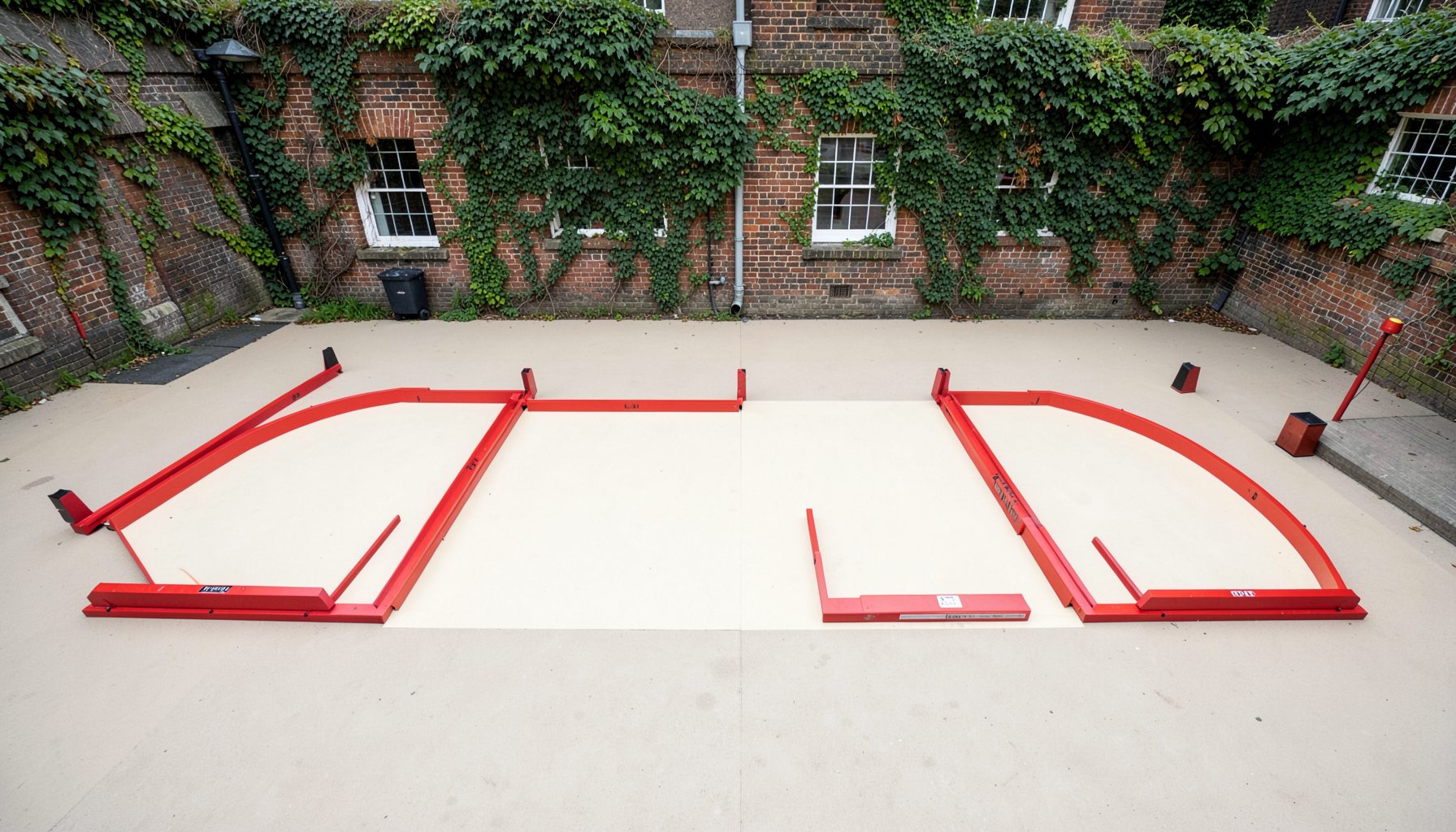
Rugby Fives courts can feel different from one another because of variations in dimensions, wall response, lighting, temperature, and floor grip. When time allows, walk around the court before warming up. Notice areas of glare, patches that appear slippery, unusual wall marks, and the amount of space available behind or beside the likely playing positions.
Players preparing for an away fixture can review the regional court guide to understand how venues may differ across the country. This should support preparation, not replace observation on the day. A court’s current condition always matters more than its reputation or previous reports.
Use the early minutes to test the ball and movement rather than trying to win points. Strike comfortably against the front wall, observe the rebound, and practise reaching different heights and angles. In doubles, communicate with a partner about spacing and preferred positions before the competitive exchange begins.
Raise The Heart Rate Gradually
A warm-up for Rugby Fives should progress from general movement to sport-specific actions. Begin with easy jogging, side steps, arm swings, and controlled mobility for the ankles, knees, hips, shoulders, and wrists. The aim is to increase temperature and range of movement without creating fatigue.
Next, add short accelerations, lateral shuffles, split steps, and changes of direction. Keep the first movements smooth and controlled, then gradually increase speed. Include lunges and low defensive positions if they are comfortable and familiar. Sudden maximal efforts before the body is ready can make the warm-up less effective.
Finish with ball work that resembles the opening demands of the match. Use steady strikes, controlled returns, and progressively sharper movement. Players should leave the warm-up feeling alert and responsive, with enough energy for the contest ahead.
Sharpen Technique Without Overloading
The final technical phase should have a clear purpose. A player might focus on a reliable serve, early positioning, low returns, or recovering quickly after a forward movement. Choose two or three priorities rather than attempting to correct every weakness immediately before play.
Short, successful repetitions are usually more valuable than a frantic collection of difficult shots. Begin with a comfortable rhythm, then add variation in pace and placement. If a technique breaks down repeatedly, simplify the movement and return to a dependable option that can be used under pressure.
The warm-up is also a chance to check hand comfort and equipment. A glove that feels loose, damp, or restrictive may affect confidence and control. Make adjustments before the match starts, when there is still time to solve small problems without rushing.
Turn Tactics Into Simple Cues
Tactical preparation works best when it produces brief reminders that can be recalled during a demanding rally. Singles players may use cues such as “recover centrally,” “watch the ball,” or “build the point.” Doubles pairs might agree on communication calls, coverage responsibilities, and who takes priority in shared spaces.
Avoid filling the mind with a long list of instructions. Select one attacking intention, one defensive habit, and one response to pressure. For example, a player could aim to use safe placement early, recover after every shot, and slow the breathing before serving when the score becomes close.
A pre-match conversation with a partner should be positive and specific. Discuss what each player will do after a short ball, how to respond when the opponents change pace, and how to reset after an error. These agreements reduce hesitation and help the pair stay connected throughout the match.
| Routine Element | Main Purpose | Practical Example | Time Needed |
|---|---|---|---|
| Equipment check | Remove avoidable distractions | Inspect shoes, gloves, clothing, and water | 5 minutes |
| General movement | Raise body temperature | Jogging, side steps, and joint mobility | 5 minutes |
| Court movement | Prepare for acceleration and recovery | Shuffles, split steps, and controlled lunges | 5 minutes |
| Ball striking | Establish timing and control | Comfortable returns followed by varied placement | 8–10 minutes |
| Tactical reset | Clarify match intentions | Repeat two or three short performance cues | 2–3 minutes |
| Breathing focus | Settle nerves and attention | Slow exhalations before entering play | 1–2 minutes |
Manage Nerves And Focus
Competition nerves are a normal physical response, especially before an important championship, club fixture, or first match at a new venue. Trying to eliminate all nervousness can create extra tension. A better approach is to recognise the feeling and direct attention towards controllable actions.
Breathing can provide a simple reset. Inhale comfortably, then make the exhalation slightly longer while relaxing the shoulders and hands. Repeat this for several cycles during a quiet moment. The exercise should feel natural and discreet, rather than becoming another task to perform perfectly.
Use a short visualisation only if it helps. Picture moving into position, tracking the ball, striking with balance, and recovering for the next exchange. Keep the image realistic and brief. The purpose is to reinforce readiness, not to predict every detail of the match.
Adapt The Routine To Competition Format
A club fixture, school event, and full tournament may require different versions of the same preparation. Before the first match of the day, complete the full movement and technical sequence. Between later matches, reduce the volume and focus on mobility, hydration, a light snack, and a few purposeful ball strikes.
Recovery is part of preparation when several fixtures are scheduled. Replace fluids, change damp clothing, and avoid sitting still for long periods if the body becomes stiff. A short walk and gentle movement can help players feel ready for the next warm-up.
You should also adapt to the opponent without abandoning your identity as a player. Observe their movement, preferred pace, and positioning during the early exchanges, then use the agreed tactical cues. Flexibility matters, but a rushed change of plan can be more damaging than a simple, well-executed game strategy.
Make The Routine Personal And Repeatable
A routine becomes useful when it is tested in training and adjusted gradually. Keep a brief record after matches: arrival time, warm-up length, energy level, equipment issues, and which cues were helpful. Patterns will emerge over several fixtures, revealing what supports performance and what merely adds clutter.
Build the routine around actions that can be repeated under pressure:
- Arrive early enough to inspect the venue without rushing.
- Complete mobility and movement drills before striking at full pace.
- Choose two or three tactical cues for the match.
- Check hydration, footwear, gloves, and clothing before entering the court.
- Finish with a calm breathing reset rather than extra, unfocused hitting.
Coaches can help players create individual routines while keeping shared team standards for doubles and squad events. Younger players may benefit from a visual checklist, while experienced competitors may prefer a shorter sequence based on personal triggers. The essential qualities are consistency, flexibility, and a clear link between preparation and performance.
A strong routine does not guarantee a particular result, but it gives players a reliable way to begin each Rugby Fives competition. Start developing yours in training, test it at club fixtures, and refine it through tournaments and championships. Explore opportunities to play, volunteer, coach, or compete through the Rugby Fives Association and take that preparation onto court at your next event.