



How to organise a Rugby Fives inter-school competition
A Rugby Fives inter-school competition can give students a fresh racquet-free court sport while building links between schools, clubs and local coaches. The game is quick to learn, active in short bursts and suitable for singles or doubles, making it practical for a one-day carnival or a series of after-school fixtures.
For Australian schools, the first task is to match the event to local facilities. Purpose-built Rugby Fives courts are uncommon in many cities, so organisers may need to work with schools, universities, independent sports centres or venues with suitable wall-and-court spaces. Melbourne, Sydney, Brisbane, Adelaide and Perth each have different transport patterns, weather conditions and access to indoor facilities.
A successful competition should feel fair and welcoming to students who have never played before. Clear divisions, short matches and a simple briefing allow beginners to participate without making experienced players wait too long. The event can then become a starting point for regular coaching, school sport exchanges and club participation.
Planning should begin at least six to eight weeks ahead, and earlier if venue hire, buses or inter-school approvals are required. Australian school calendars vary between states, while terms, assessment periods and public holidays can affect attendance. A well-organised event respects those realities and gives teachers enough notice to secure consent and supervision.
Set the purpose and secure a venue
Decide what the competition is meant to achieve before setting the date. A first event might focus on participation and school connections, while a later championship could emphasise performance and rankings. For a new programme, mixed-experience pools and a participation award may be more suitable than an elimination-only format.
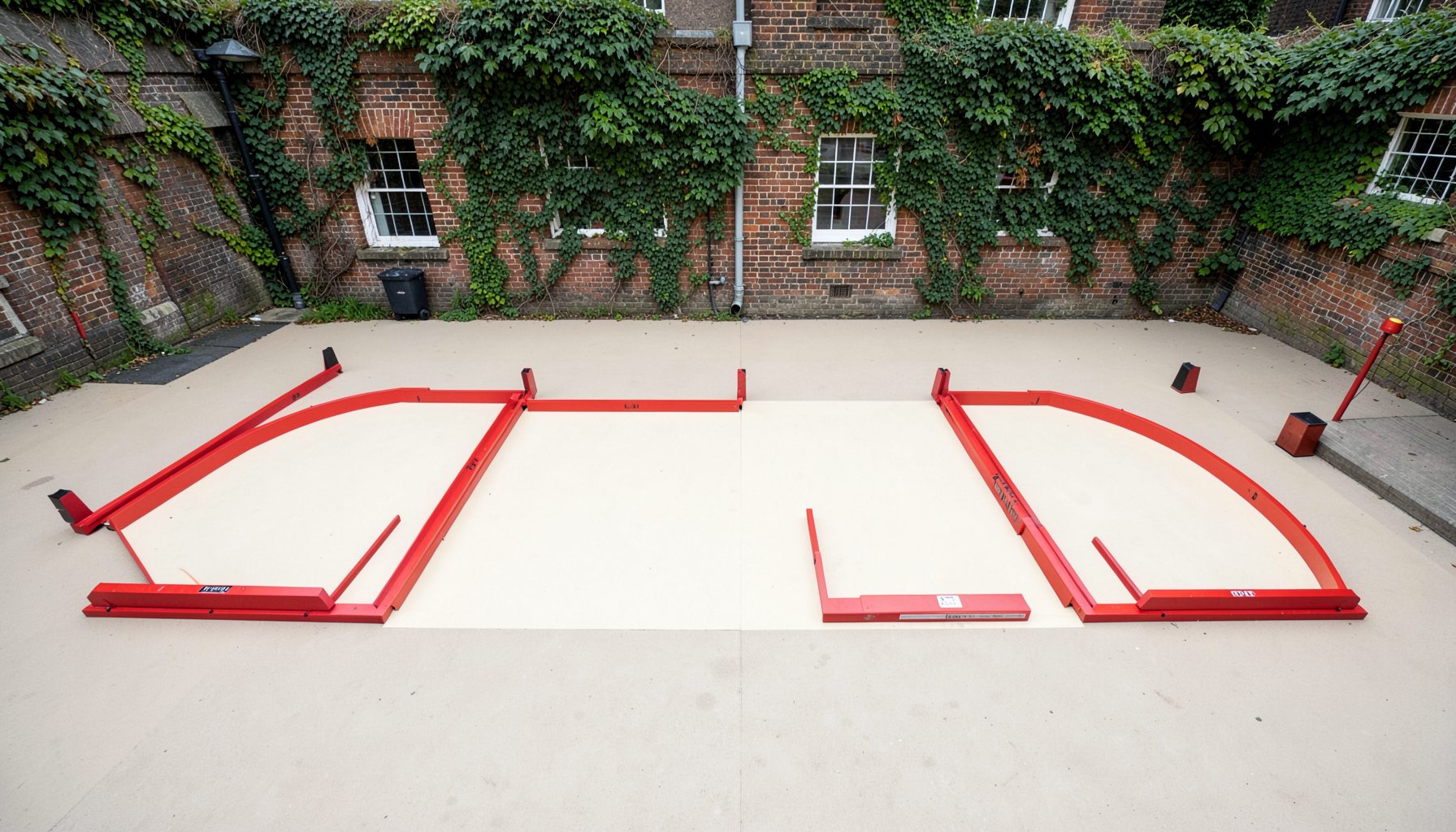
Choose a venue that can support safe movement around the court, clear supervision and reliable access to toilets, drinking water and first aid. A school with several courts is ideal, but a single court can work for a smaller pilot. Ask venue managers about wall condition, lighting, noise restrictions, changing areas, public liability requirements and whether school-aged participants are covered by the hire agreement.
Weather is a practical consideration in Australia. An indoor venue is valuable during Melbourne’s colder winter months, while shade, ventilation and drinking breaks matter during warmer periods in Brisbane, Perth or Sydney. If an outdoor space is used for travel, assembly or lunch, include a wet-weather and extreme-heat plan rather than relying on conditions being favourable.
Build entries around a workable format
Start with divisions that schools can understand quickly. Possible categories include junior and senior age groups, girls’ and boys’ divisions where appropriate, open divisions, and a beginners’ section. Schools should be able to nominate singles players, doubles pairs or both, with a clear rule for replacing a late withdrawal.
A pool-to-playoff format generally gives students more court time than a straight knockout. Teams can play short timed matches or first-to-a-set score, with a central timekeeper announcing rotations. Pool results should use predetermined tie-breakers, such as match wins, points difference and head-to-head results, so teachers are not asked to interpret rules during a busy session.
Keep the entry process simple. Collect the school contact, team manager, student names, year levels, emergency details and playing experience through one form. Set a closing date that leaves time to create draws and send a competition pack. Include court etiquette, footwear requirements, arrival instructions, lunch arrangements and the process for reporting an injury.
For a developing programme, avoid placing every strong player in one division without thought for the wider event. A short skills challenge, social doubles round or coaching station can give less experienced students a meaningful role. This also helps schools justify attendance when their teams are still learning the sport.
Put safeguarding and operations first
Every participating school should nominate a responsible adult who remains accountable for its students. Confirm supervision ratios, emergency contacts, medical information, medication procedures and collection arrangements. The organiser should prepare an incident form, first-aid kit, ice packs, charged phone and a clear route to emergency services.
Child-safety obligations differ across Australia. Depending on the state or territory, adults may need a Working with Children Check, a Blue Card or another approved screening process. The organising school and venue should confirm the applicable requirements rather than assuming that a volunteer’s clearance from another state is automatically sufficient. Photography, video, transport and student data also require consent and careful handling under school and privacy policies.
Brief officials, coaches and volunteers before the first match. Their instructions should cover safe warm-ups, court entry and exit, conduct, disputes, scoring and what to do if a student feels unwell. Rugby Fives is fast and requires players to react close to a wall, so officials should stop play when the court becomes unsafe or when a participant needs attention.
Build the timetable around the habits of school sport. Allow time for buses to arrive, roll marking, a welcome briefing, toilet breaks and lunch. In large metropolitan areas, public transport delays can affect morning arrivals, while regional schools may need longer travel windows. A timetable that starts ten minutes late is easier to recover from when every rotation includes a small buffer.
Run matches fairly and keep results visible
Send a one-page rules summary before the event and repeat the key points at the venue. Explain serving order, legal returns, boundaries, lets, scoring and the role of the referee or court supervisor. Demonstrate a rally for first-time players, then give teams a brief warm-up before competition begins.
Use a central results desk with a printed draw and a digital backup. Each court can have a score sheet showing players, match number and result, while the desk records completed matches immediately. Assign one person to check entries and another to update the draw, reducing errors when several courts finish at the same time.
Results should be transparent and easy for schools to retain. Publish final standings with student privacy in mind, using school and player names only where permission allows. For students progressing into wider competition, the rankings archive can provide useful historical context and help organisers understand how results have been recorded over time.
Officials should apply the same process to every dispute. Allow a brief clarification from the team manager, make the ruling, and move play on. A calm procedure protects the event’s credibility and prevents a single disagreement from delaying an entire round.
Turn one event into a school pathway
The competition should finish with a clear next step. Provide teachers with coaching contacts, basic practice ideas and information about future fixtures. A short follow-up session at each school can maintain interest, particularly when students have enjoyed the event but do not yet have access to a regular club.
Invite local coaches or experienced players to support the day, provided their roles and safeguarding responsibilities are clear. They can run a lunchtime demonstration, help teachers learn the fundamentals and identify students who may enjoy higher-level competition. Community partnerships can also reduce the pressure on school staff to deliver every session alone.
Collect practical feedback within a week. Ask teachers whether the venue, format, timing and communication worked, and record participation numbers, completed matches, injuries and withdrawals. Keep the information with the school’s sport records so the next organiser does not have to rebuild the process from scratch.
The most suitable format depends on the purpose, available courts and experience of the students:
| Competition format | Best for | Strengths | Watch-outs |
|---|---|---|---|
| Pool play and finals | A full-day school carnival | Gives every team several matches | Needs careful timekeeping |
| Straight knockout | A small advanced field | Simple draw and quick finish | Some students may play once |
| Festival rotation | Beginners and mixed abilities | High participation and low pressure | Requires flexible scoring |
| Inter-school league | A term-long programme | Builds regular habits and rivalries | Needs reliable transport and dates |
| Singles and doubles divisions | Schools with varied entries | Offers more ways to participate | Requires extra draws and officials |
Invite schools to register through the Rugby Fives Association, connect the event with existing clubs and share a concise report after the day. With a suitable venue, responsible supervision and a format that values court time, an Australian school can establish a repeatable Rugby Fives fixture that grows from a single carnival into a lasting pathway.