



Bringing Rugby Fives to Australian schools through taster sessions
Rugby Fives is a handball game played with gloved hands against the walls of a three-sided or four-walled court, and it has long thrived in the United Kingdom as a competitive school sport. Bringing this unique game to Australian classrooms opens a fresh avenue for physical literacy, particularly in regions where traditional team sports already dominate the school calendar. A well-planned taster session can introduce students to a fast, social, and inclusive game that complements netball, cricket, and Australian rules football without competing for the same field space.
For teachers and coaches working within the Australian Curriculum's Health and Physical Education framework, introducing a niche sport offers variety while still covering fundamental movement skills. Many schools in Melbourne and Sydney already run multi-sport programs through their sporting associations, and a Rugby Fives introduction can slot neatly into these rotations. The activity also suits the often-overlooked indoor spaces of Australian schools, where wet-weather timetables frequently demand adaptable programming.
Local primary schools and secondary colleges are increasingly receptive to visiting coaches who can deliver a curriculum-linked session without requiring expensive equipment or transport. A taster format removes the pressure of commitment, allowing students to discover the rhythms of the game in a single lesson block. When executed thoughtfully, it becomes a gateway to ongoing participation and, potentially, interschool fixtures down the track.
Getting to know Rugby Fives and why students respond to it
Rugby Fives rewards hand-eye coordination, agility, and quick tactical thinking more than raw physical size, which makes it especially appealing to mixed-ability groups. A standard game pits two players against each other on a court resembling a squash court without a back wall, using a small hard ball that must be struck with gloved or bare hands depending on the school setting. Because rallies are short and scoring is cumulative, students experience moments of success early, which keeps disengaged learners attentive.
The game's appeal also lies in its cultural heritage and its parallels with sports Australian students may already know. The motion of striking a ball against a wall mirrors elements of cricket training drills or tennis practice, making the learning curve feel familiar. Coaches can lean on these comparisons when introducing the basic underarm and overarm serves, helping young players connect new skills to existing muscle memory.
Schools in Brisbane and Adelaide that have trialled wall-based sports often report strong engagement among students who find mainstream ball sports overwhelming. Rugby Fives fits naturally into inclusive programs, including those supporting students with disability, because the court dimensions can be adapted and the pace negotiated between players. This flexibility is a powerful selling point when approaching principals and heads of Health and Physical Education.
Building relationships with schools, teachers and sport coordinators
Reaching the right person is the first practical step, and in Australian schools that often means the Head of Health and Physical Education or the school's Sport Coordinator rather than the principal directly. A brief email outlining the session's objectives, links to the relevant curriculum, and any safeguarding credentials typically opens the door to a follow-up conversation. Coaches who have completed a Working with Vulnerable People registration, or the relevant state equivalent such as a Working with Children Check in New South Wales or a Victorian Institute of Teaching registration for educators, signal professionalism from the outset.
Partnering with state-level bodies such as School Sport Australia or local interschool associations can also lend credibility to the initiative. Many primary schools across greater Melbourne participate in divisions run by School Sport Victoria, and these organisations often welcome new activity providers willing to deliver introductory sessions. Coaches who volunteer through local clubs in suburbs like Hawthorn, Parramatta, or Carindale find that community visibility translates into easier school access.
Offering a free or subsidised first visit removes a common barrier for cash-strapped school budgets. Some coaches pair the Rugby Fives session with a broader demonstration of handball-style games, giving teachers takeaway ideas they can use in subsequent lessons. Building this kind of goodwill creates a pathway toward recurring visits and, eventually, after-school programs run through Outside School Hours Care services.
Planning the practical elements of the session
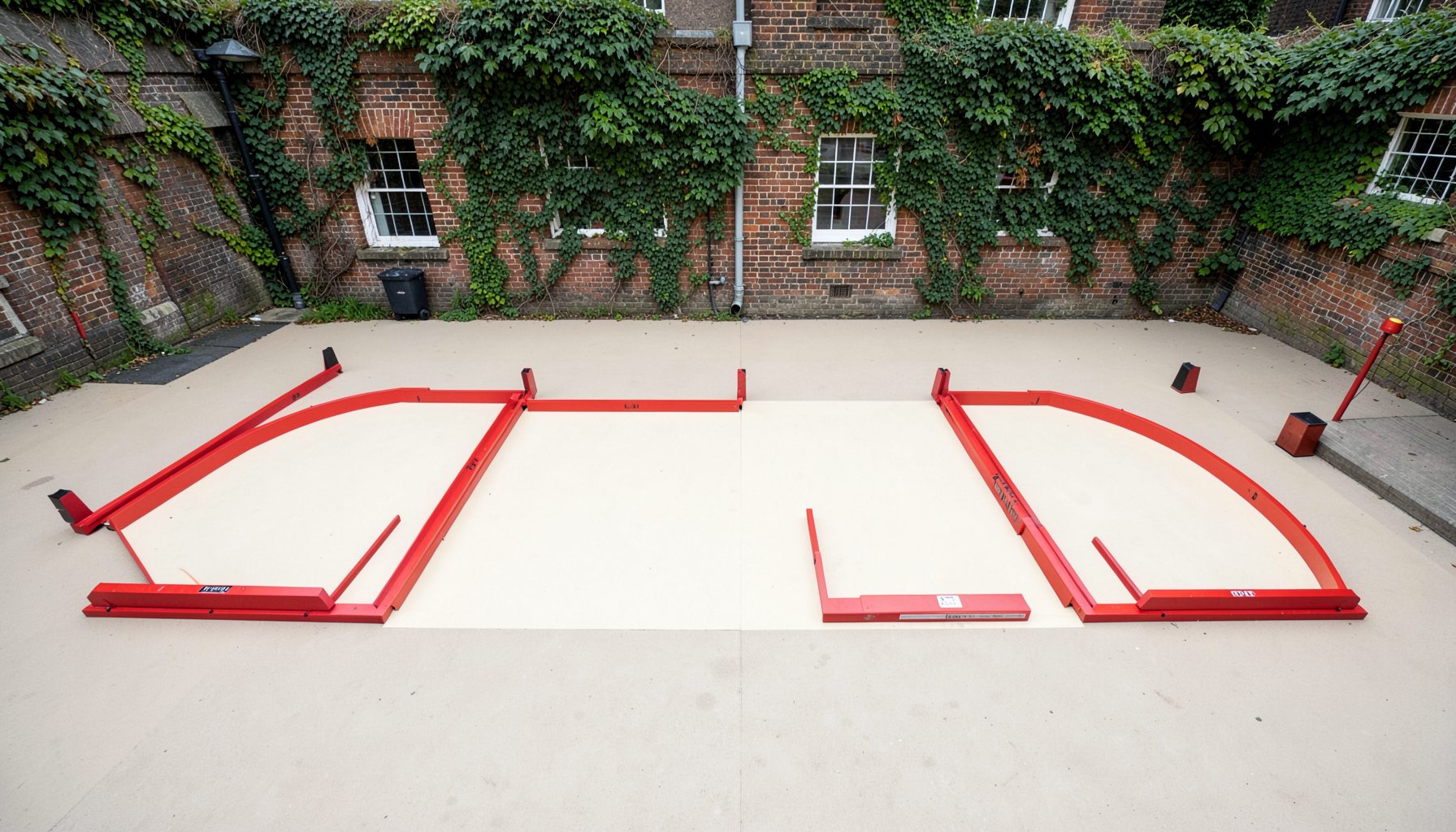
A successful taster session begins with equipment that travels easily: a few soft balls, marker cones, skipping ropes for boundary lines, and printed handouts illustrating court markings. Because many Australian schools do not have a dedicated Fives court, the session can be adapted to a gymnasium wall, a tennis practice wall, or even a corridor with sufficient ceiling height and protective netting. A portable whiteboard helps explain scoring, particularly the cut-and-hatchet serve combinations that define the sport.
Time allocation usually mirrors a standard lesson period of 45 to 60 minutes, with the first ten minutes dedicated to a warm-up and ball familiarisation. Coaches should then spend roughly 20 minutes on skill drills, rotating students through serving, returning, and rallying patterns, before finishing with a mini-game format that allows small groups to apply what they have practised. This structure aligns with the way most Australian schools plan their Health and Physical Education blocks and leaves room for a closing cool-down and question session.
Permission slips, photography consent forms, and risk assessments are non-negotiable in the Australian school environment. Aligning these documents with templates already used by the host school reduces administrative friction and speeds up approval. Coaches should also confirm insurance coverage, either through their own association or the school's existing policy, and brief supervising teachers on safety protocols before any student picks up a ball.
Delivering a session that captures attention
The opening minutes of a session set the tone, so coaches should demonstrate a brief rally to spark curiosity before students even step onto the court. A short video clip of Rugby Fives highlights, played on a laptop or tablet, can work in classrooms that lack a clear view of the playing area. Once students see the speed and athleticism of the game, motivation tends to rise sharply.
Pupils learn best when they feel the rules make sense, so introducing scoring through a simple ladder system helps. Start with cooperative rallies where the goal is simply to keep the ball going for a set number of hits, then introduce a single point for an unreturned ball. This scaffolding lets students experience the rhythm of the game before tackling more advanced concepts like the set position and corner play that defines competitive Rugby Fives.
Inclusive language matters, and Australian classrooms are increasingly diverse in both cultural background and sporting experience. Coaches who frame the session around personal challenge rather than winning and losing create a welcoming environment that encourages every student to participate. Pairing less confident players with supportive partners, and rotating teams frequently, ensures no one lingers on the sideline.
Turning a single session into lasting engagement
A taster is only the beginning, so leaving behind a clear pathway matters. Coaches should provide teachers with a one-page summary of basic rules, suggested drills for follow-up lessons, and contact details for any local clubs or upcoming competitions. Where state associations exist, linking teachers to these bodies strengthens the bridge between school and community sport.
Social media groups, school newsletters, and parent communication apps such as Compass or Seesaw offer excellent channels for promoting follow-up opportunities. A short photo montage of the session, shared with appropriate permissions, often prompts parents to ask whether their child can continue playing. This organic interest tends to be more effective than any paid advertisement.
For schools eager to embed Rugby Fives into their annual calendar, the next logical step is establishing a lunchtime or after-school club. Coaches who commit to a six-week block of sessions typically see a core group of enthusiastic students emerge, ready to represent the school in friendly fixtures against neighbouring schools. Over time, this grassroots pipeline can reshape how handball-style games are perceived within Australian school sport.
Organising a taster today can plant the seed for a thriving school program tomorrow. Reach out to your nearest school, share the plan outlined here, and offer a date within the current term to begin introducing Rugby Fives to a new generation of Australian players.