



Shadow Practice for Sharper Rugby Fives Strokes
Shadow practice is a simple way to improve Rugby Fives technique without needing a partner, a ball or a fully booked court. You rehearse the movements of a stroke in sequence: ready position, first step, body rotation, hand path, contact shape and recovery. The aim is to make efficient movement familiar before pressure and pace are added.
For Australian players, this approach can make training easier to fit around work, school and court availability. A few focused minutes in a garage, sports hall or quiet corner of a squash facility can reinforce the same habits used on a Rugby Fives court in Sydney, Melbourne, Brisbane or elsewhere.
| Training approach | Best use | Main benefit | Common limitation |
|---|---|---|---|
| Shadow practice | Technique and footwork | Repetition without equipment | Must be checked against real ball flight |
| Wall hitting | Timing and rebound reading | Immediate feedback | Requires a suitable wall and court |
| Partner drills | Decision-making and placement | Adds movement and pressure | Depends on another player |
| Match play | Tactics and composure | Transfers skills under stress | Technical faults can become repeated habits |
Understand The Purpose Of The Movement
A shadow stroke is not mime for its own sake. Every rehearsal should represent a real playing problem, such as reaching a low backhand, preparing for a fast return or recovering after striking from the side wall. Visualise the ball travelling towards a specific target and move as though its speed and height matter.
Begin in a balanced ready position with soft knees, relaxed shoulders and hands prepared in front of the body. From there, rehearse the first movement before the stroke itself. A small split step, a quick adjustment or a crossover step may determine whether you arrive comfortably or stretch late. The quality of the first step often matters more than the size of the swing.
Use a deliberate tempo at first. A slow rehearsal allows you to notice whether your head remains steady, your weight transfers in the intended direction and your non-playing hand helps with balance. Once the sequence feels coordinated, add realistic speed while keeping the same order of actions.
Build Reliable Forehand And Backhand Patterns
For a forehand shadow stroke, picture the ball arriving at a comfortable height on your preferred side. Turn from the hips and shoulders, move the striking hand into a controlled preparation and step towards the imagined contact point. Rehearse a compact forward action rather than an oversized swing. Your finish should leave you ready to move again, not frozen in a pose.
The backhand deserves particular attention because players often reach with the arm instead of moving their feet. Start the shoulder turn early, make room beside the body and use small adjustment steps to arrive alongside the imagined ball. Practise both a firm, level stroke and a lower defensive action, since Rugby Fives rallies can change height quickly.
Include volley preparation in the same session. A volley shadow movement should be shorter and earlier than a full stroke, with the hands in front and the body ready to absorb pace. Avoid snapping at an imaginary ball from behind the body. The movement should suggest a controlled interception followed by immediate recovery towards a useful court position.
Use Court Landmarks And Visual Targets
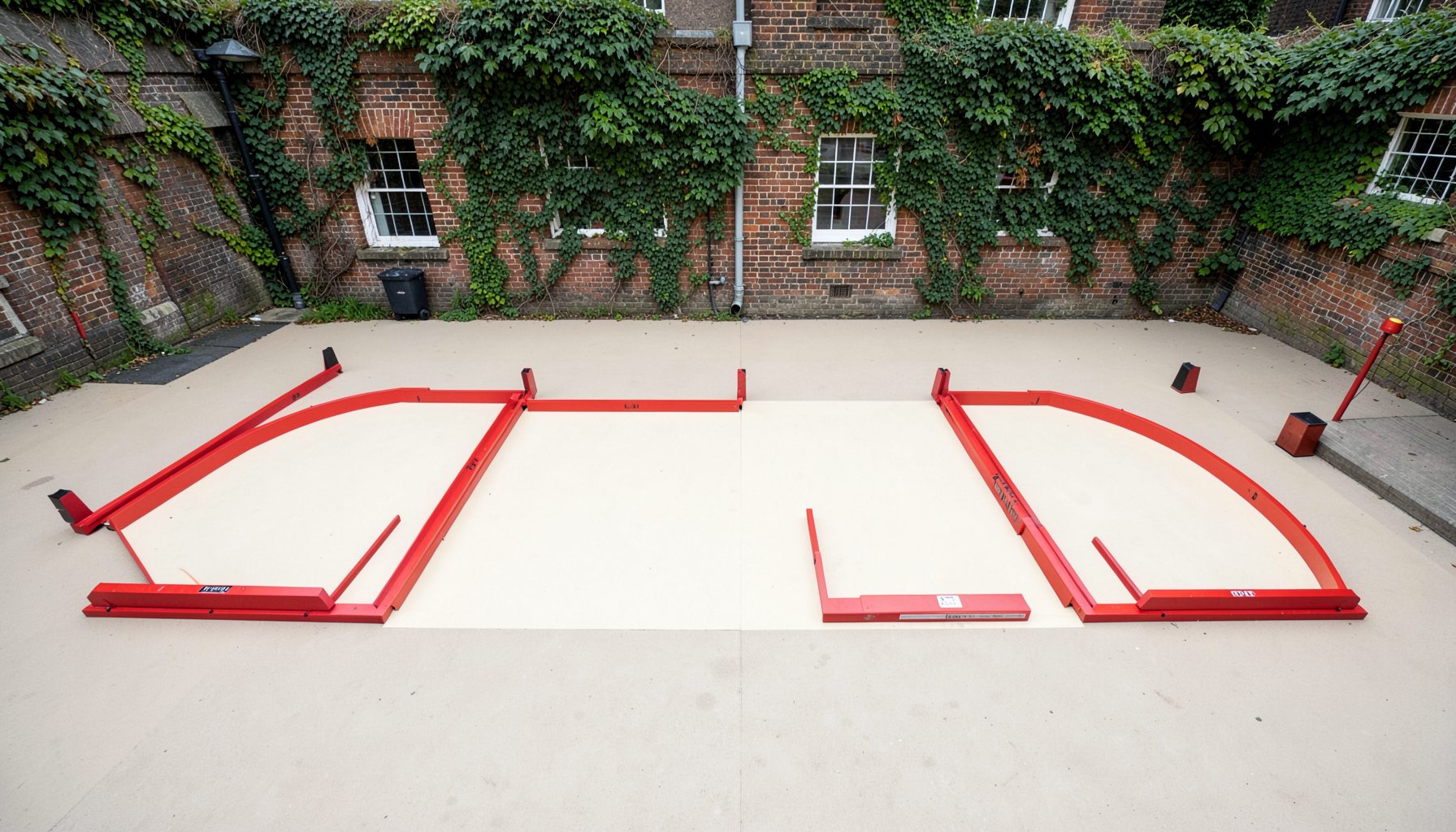
Shadow practice becomes more precise when it is tied to landmarks. On a court, select positions such as the service area, centre line, side wall or a point a step away from the back wall. Rehearse moving from one landmark to the next, striking towards an imagined section of the front wall, then returning to a balanced base.
If you are training away from a court, create safe reference points with floor markers or existing lines. A driveway, indoor sports court or open area may work for footwork, provided the surface is even and the space is clear. In Australia, a garage or covered patio can be useful in hot weather, but check overhead clearance and avoid practising on slippery concrete in bare feet.
Give every imagined stroke a target and a purpose. For example, picture a forehand directed high to gain time, a backhand kept away from an opponent’s reach or a volley that changes the rally’s pace. This connects stroke mechanics with placement rather than turning the exercise into empty repetition.
Plan Short Sessions That Stay Focused
A productive shadow session can take 12 to 20 minutes. Start with two minutes of general movement: easy footwork, hip turns, shoulder circles and gentle lunges. Follow with three minutes of ready-position and recovery work. Then spend several minutes on forehand, backhand and volley patterns before finishing with point-style sequences.
Try a simple structure of six repetitions per pattern, performed first slowly and then at match rhythm. After each group, reset your feet and ask whether the imagined contact point was in front, beside or behind the body. Avoid chasing fatigue. Once technique becomes loose or balance deteriorates, the nervous system is learning the wrong version of the movement.
Australian conditions should influence when and where you train. In Brisbane or Perth, an early-morning or evening session may be more comfortable during warmer months, while Melbourne players may prefer an indoor venue when winter weather interrupts outdoor routines. Many local facilities are shared with squash or other court sports, so a short, quiet practice block is easier to arrange than a long booking.
Record a few sessions on a phone from the side and front. Video can reveal a collapsing knee, a late preparation or a finish that pulls you away from the next shot. If training in a school or community program, obtain appropriate permission before filming children and store footage responsibly. Coaches working with juniors should follow the relevant state or territory child-safe requirements and hold the required Working with Children Check where applicable.
Transfer Rehearsal Into Real Rallies
Shadow practice must eventually meet a ball. After rehearsing a movement, hit a small number of real strokes with the same starting position and recovery. Begin with predictable feeds, then vary the height, width and pace. The aim is to preserve the movement pattern while adapting to a ball that will never arrive exactly where you expect.
Use a three-stage progression. First, practise a single stroke from a known position. Next, combine two movements, such as a backhand followed by recovery and a forehand. Finally, create a short rally pattern in which you imagine an opponent changing direction. This develops perception, decision-making and court coverage alongside technical form.
A useful partner drill is to call the intended shot before moving, then have the feeder send the ball to a related area. If you call “backhand” but receive a ball that requires adjustment, keep the feet active and choose the safest response. This prevents shadow work from producing rigid choreography that breaks down as soon as the rally becomes unpredictable.
Finish with a few points in which you focus on one cue only, such as “prepare early” or “recover after contact”. Too many technical reminders can slow reactions. After play, note which shadow pattern appeared naturally and which one disappeared under pressure. That observation should guide the next session.
Build shadow practice into the wider Rugby Fives community rather than treating it as a replacement for coaching and competition. Australian players may find opportunities through schools, university clubs, community sports centres and visits from experienced players or coaches. The Rugby Fives Association can help connect participants with the sport’s competitions, clubs, coaching activity and national network.
Set aside a regular slot, keep the movement safe and purposeful, then test each improvement against real opponents. Contact the Rugby Fives Association to find suitable playing opportunities, coaching support or events, and bring your shadow-work routine to the next session with a clear technical focus.