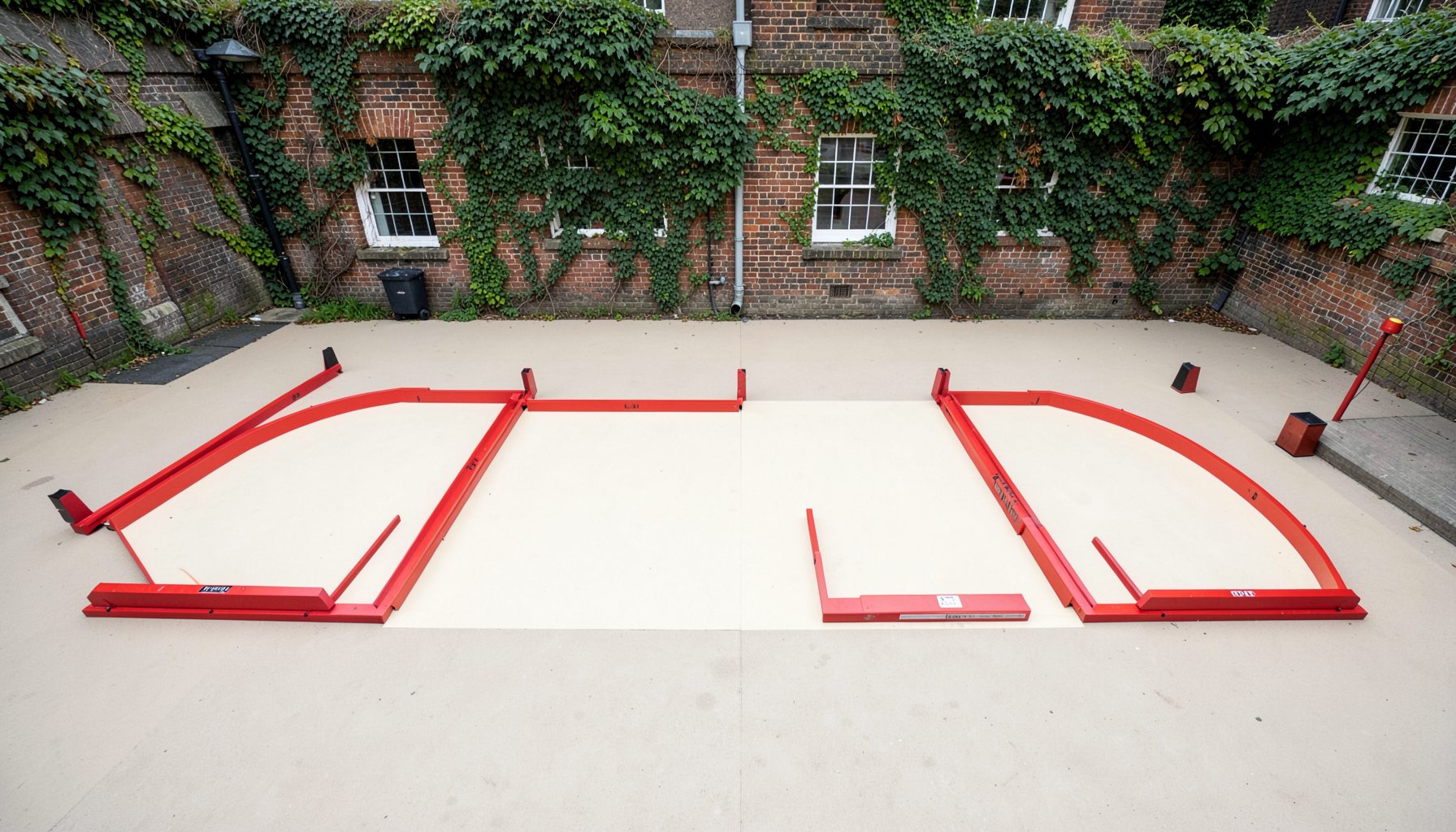




The Best Rugby Fives Courts In The UK By Region
Rugby Fives is played on compact, four-walled courts where movement, touch, anticipation, and control matter as much as power. The best venues combine well-maintained playing surfaces with reliable lighting, clear court lines, changing facilities, and a welcoming community of players.
The UK has an unusually rich range of courts. Some are attached to historic schools and colleges, while others are used by established clubs, universities, or community programmes. Access can vary considerably, so a famous court is not always the easiest place for a first session.
This regional guide highlights the character of important Rugby Fives centres, explains what makes a court worth visiting, and shows how to find a suitable venue for your level. It also distinguishes between courts with strong heritage and those that offer the most practical opportunities for regular play.
What Makes A Great Rugby Fives Court
Court quality begins with the playing surface. A clean, even floor allows players to change direction safely and judge the rebound accurately. Walls should be sound and consistent, since small differences in texture or damage can alter the pace of a rally. Good lighting is equally important, particularly for evening fixtures and coaching sessions.
The surrounding facilities shape the experience too. Secure access, changing rooms, showers, spectator space, and equipment storage can make a major difference during tournaments. A venue with an active club or school programme is especially valuable because it offers opportunities to play different opponents rather than simply providing an empty court.
Heritage also matters in Rugby Fives. Historic courts connect modern players with the sport’s traditions, while newly refurbished facilities can provide excellent conditions for competition. The strongest venues usually balance both: a recognisable place in the game’s history and a practical commitment to maintaining regular play.
London And The South East
London and the wider South East contain many of the country’s most established Rugby Fives communities. Harrow School is closely associated with the development of the sport, and its courts hold particular historical importance. Access is generally controlled by the school, so visitors should arrange permission well in advance rather than arriving without an appointment.
St Paul’s School and other independent schools in the capital and neighbouring counties have also helped sustain the game through school matches, coaching, and inter-school competition. These courts can be excellent for experienced players when fixtures or organised events are taking place, although public access is often limited during term time.
Eton College provides another important court setting near Windsor, while venues across Berkshire, Surrey, and Hertfordshire support school and club networks. For players based in London, the area’s main advantage is density: several clubs and institutions may be reachable without a long journey, making it easier to find coaching, leagues, and regular opponents.
The South West And The Midlands
The South West has a strong connection with traditional school-based Rugby Fives. Winchester College and Marlborough College are among the best-known names in this part of the country, with historic facilities and a long association with inter-school matches. Their courts are especially appealing for players interested in the architectural and sporting heritage of the game.
Rugby School in Warwickshire gives the sport one of its most significant locations. The school’s name is central to Rugby Fives history, and the venue represents the link between the sport and the wider Rugby tradition. Playing there may depend on school calendars, events, or permission, but it remains a landmark for anyone tracing the game’s origins.
The Midlands can also be convenient for national events because of its central position. Players travelling from different regions may find tournaments and coaching days here more accessible than fixtures concentrated in the South East. University and school facilities in Birmingham, Coventry, Leicester, and surrounding areas can add further options, subject to local arrangements.
Northern England And Wales
The North of England has fewer courts than the South East, but its established schools and clubs make an important contribution to the national game. Venues in Yorkshire, Lancashire, and the North East can provide a strong community atmosphere, particularly where a school court is linked to an active local club or former-pupil network.
Distance is a more significant factor for northern players, so a court’s value often depends on the consistency of its programme. A modest facility with weekly practice, coaching, and competitive fixtures may be more useful than a visually impressive court that is rarely available. Regional tournaments can help bring players together and reduce the need for frequent long-distance travel.
Wales has its own place in the wider Rugby Fives story through school sport and cross-border competition. Welsh players may regularly travel to English venues for tournaments, while English clubs can benefit from visiting Welsh schools and community programmes. Checking current fixtures with the Rugby Fives Association is the best way to identify active opportunities rather than relying only on historic venue lists.
| Region | Court Character | Best For | Access Considerations |
|---|---|---|---|
| London and South East | Dense network of historic school and club venues | Regular fixtures, coaching, and competitive play | Many courts require school or club permission |
| South West | Traditional courts with strong heritage | Visitors interested in history and organised matches | Availability often follows school terms |
| Midlands | Central location and important historic connections | National events and travelling players | Confirm event access before making a journey |
| Northern England | Smaller but committed regional communities | Club development and local competition | Travel distances can be considerable |
| Wales | School-based activity and cross-border links | Regional tournaments and community growth | Opportunities may depend on scheduled events |
Finding A Court That Suits Your Level
The right venue depends on what you want from a session. Beginners benefit from patient coaching, clear instruction, and a club that can lend suitable equipment. Experienced competitors may prioritise tournament-standard courts, strong opposition, and a fixture calendar. Families and schools may need daytime access, safeguarding arrangements, and sessions designed for younger players.
Before booking, ask whether the court is available for casual play or only for organised fixtures. It is also sensible to check footwear requirements, wall and floor condition, playing hours, parking, and whether rackets and balls are provided. These details prevent an inconvenient journey and help organisers plan a safe session.
New players can learn the basic rules, scoring system, and equipment requirements through the Association’s beginner’s guide. After that, contacting a nearby club or school programme is usually the quickest route to a first coached game.
Historic Courts And Modern Playing Needs
A historic court can be inspiring, particularly when its proportions, markings, and walls have been preserved over many years. Such venues offer a direct connection with former champions, school rivalries, and the development of Rugby Fives across Britain. They are ideal settings for commemorative matches, tours, and major events.
Modern playing needs are more practical. Players increasingly expect dependable lighting, accessible facilities, online fixture information, and straightforward booking arrangements. Refurbishment can improve safety and consistency without removing the character that makes older courts special.
The best venues for the sport’s future are therefore not defined by age alone. A recently improved court with an active junior programme may have greater long-term value than a famous but underused facility. Regular participation, volunteer support, and a clear pathway from beginner sessions to competitive play are the clearest signs of a healthy Rugby Fives centre.
Recommendations For Planning A Visit
- Contact the venue or local club before travelling, especially when the court is located at a school.
- Choose a coached session if you are new to the game or have not played for several years.
- Check court condition, footwear rules, lighting, changing facilities, and equipment arrangements in advance.
- Look for fixtures, tournaments, or open days if you want to meet other players.
- Support venues that provide junior coaching, inclusive sessions, and regular community access.
The best Rugby Fives court is ultimately the one where you can play safely, find opponents, and become part of an active sporting community. Historic venues provide atmosphere and identity, while local clubs and school programmes create the regular contact that helps players improve.
Use the Rugby Fives Association’s competitions, clubs, coaching networks, and regional information to plan your next session. Whether you are discovering the game, returning to it, or preparing for a national fixture, visiting a court and joining an organised programme is the first step towards keeping Rugby Fives thriving across the UK.