



The Evolution of Rugby Fives Court Dimensions Over Time
Rugby Fives is often described through its fast hand play, close walls and demanding changes of direction. Yet the court itself is just as important to the sport’s character. Its length, width, wall height, floor and playing lines determine how quickly the ball travels, how much space players have to recover and which shots can be used safely.
For Australian players, coaches and schools, court dimensions can seem especially significant because most local sports facilities are planned in metric measurements. Rugby Fives developed in Britain using feet and inches, while modern construction in cities such as Sydney, Melbourne and Brisbane usually follows Australian building standards and multi-use indoor facility requirements.
Understanding how the court developed helps explain why older venues may feel different from recently refurbished courts. It also gives clubs a practical basis for assessing a potential venue, comparing historic records and introducing the sport to schools without losing the qualities that make Rugby Fives distinctive.
From Rugby School To A Recognisable Court
Rugby Fives grew from handball games played at Rugby School in the nineteenth century. Early play was shaped by the available architecture: walls, corners, ledges and enclosed spaces created a target and a set of natural boundaries. The sport did not begin with a single purpose-built international court design.
As the game became more organised, courts were built specifically for Fives rather than adapted from existing school structures. This brought greater consistency to the playing area, especially in the relationship between the front wall, side walls and back wall. Players could then expect broadly similar rebounds when visiting another school or club.
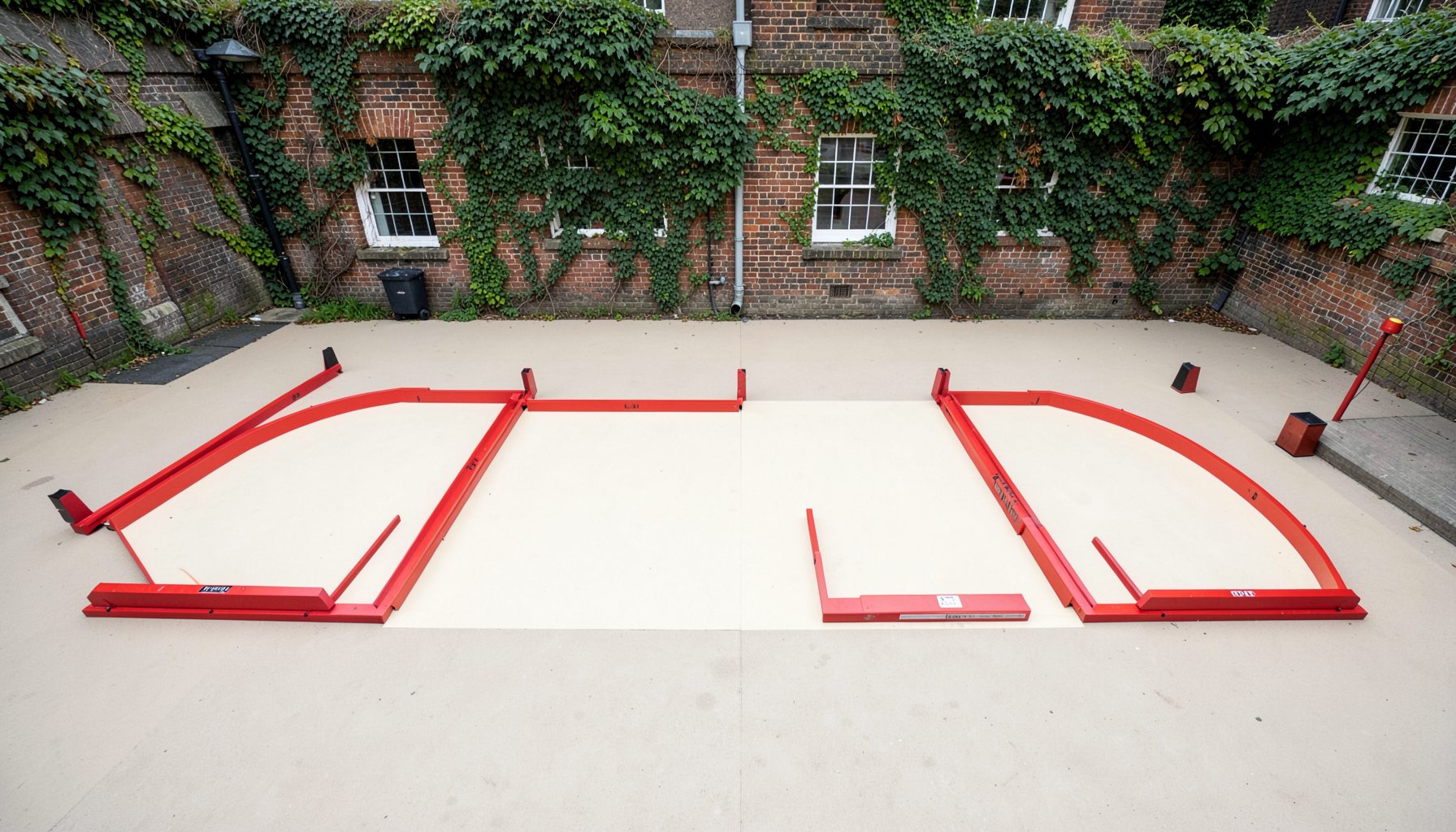
The Rugby Fives court that became familiar in the modern era is commonly associated with a playing area around 28 feet long and 18 feet wide. The front wall is generally about 15 feet high, with the rear height often lower or formed by a sloping roofline. Exact measurements have varied between venues, particularly in older school courts.
Why Imperial Measurements Still Matter
The traditional dimensions were established in imperial units, and those measurements remain embedded in the sport’s history and regulations. A court approximately 28 feet by 18 feet converts to about 8.53 metres by 5.49 metres. That conversion is useful for planning, but rounding each figure too aggressively can alter the proportions of the court.
A small change in length affects the time available after a rebound. A wider court creates additional angles and gives players more room to cover the side walls. Wall height changes the range of defensive and attacking shots. These differences may be subtle to a casual observer but are quickly noticed by experienced players.
For an Australian venue, the safest approach is to record both the official imperial specification and the exact metric dimensions used during construction. Plans should also identify wall thickness, clear height, floor levels and any intruding beams or ventilation equipment. A court that meets the footprint requirement but has an obstructed roof space may still be unsuitable for competition.
The Role Of Walls, Lines And Rebounds
Rugby Fives is played across a four-wall enclosure, so the walls are active parts of the court rather than passive boundaries. The front wall provides the primary target, while the side and rear walls create the rebounds that make rallies unpredictable. Their flatness, stiffness and junctions can influence play almost as much as the stated measurements.
Older courts may contain irregular surfaces, repaired masonry or slight variations in the corners. Such features are part of the character of historic venues, although they can make comparison difficult. Modern construction usually aims for smoother wall faces and more predictable rebounds, supporting coaching, officiating and safer competition.
Court markings and wall lines also help define the playing environment. They need to be clear without becoming visually distracting, especially under artificial lighting. In a refurbished Australian school or community centre, designers must balance traditional markings with existing lines for basketball, badminton or futsal. A cluttered floor can affect both players’ concentration and the visibility of the ball.
Standardisation And Competitive Fairness
The gradual standardisation of court size allowed Rugby Fives to develop a more reliable competition structure. Fixtures, championships and rankings are easier to administer when players know that the court will fall within an accepted range. Consistent dimensions also make coaching advice transferable from a club session to a tournament.
Standardisation does not mean every historic court is identical. The Rugby Fives Association and affiliated clubs have long had to work with venues built at different times and under different conditions. Some courts have unusual roof profiles, altered flooring or limited spectator space. These factors need to be recorded when results and venue histories are maintained.
For tournament organisers, measurement is only one part of preparation. Lighting, ventilation, wall condition, floor grip and safe run-off areas matter as well. A court may be dimensionally accurate but still require repair before hosting a major event. Clear venue records help players understand whether a result took place on a fully compliant competition court or a more informal historic facility.
Adapting The Sport To Australian Facilities
Rugby Fives remains a relatively specialised sport in Australia, so a new venue is more likely to be part of a school, university or multi-sport centre than a dedicated national facility. Melbourne schools may have access to indoor courts designed for several activities, while clubs in Sydney or Brisbane may need to negotiate shared use of existing spaces. The court’s compact footprint can help, but the walls and roof height require careful planning.
Australian metric practice also affects procurement. Builders, architects and facility managers work in millimetres, and products are selected according to local availability. A club converting the traditional 28-by-18-foot plan should avoid treating the conversion as an invitation to redesign the proportions. The aim should be to preserve the established playing geometry while meeting the National Construction Code and relevant state requirements.
Climate is another local consideration. In Brisbane and northern New South Wales, humidity and air-conditioning can influence floor moisture, ball behaviour and player comfort. In Perth or Adelaide, hot conditions may place extra demand on ventilation and temperature control. Indoor air movement should be managed so it does not interfere with the ball or create uneven playing conditions.
Preserving Tradition While Planning Ahead
The evolution of court dimensions is also a story about preservation. Historic Rugby Fives courts are valuable because they connect current players with schools, clubs and competitions from earlier generations. Before altering an old venue, associations should photograph it, measure it carefully and preserve records of its original features.
At the same time, future courts must be practical and inclusive. Access routes, doors, lighting controls, changing areas and viewing spaces should be considered alongside the playing enclosure. Australia’s Disability Discrimination Act 1992 and access provisions within the National Construction Code are important parts of any new facility project, even when the sport itself requires a specialised court.
A well-designed modern court can respect traditional dimensions while supporting contemporary participation. Durable wall finishes, shock-appropriate flooring, efficient lighting and accessible surrounding facilities can reduce maintenance and widen involvement. This is particularly useful for school programmes, community outreach and coaching sessions where players may be encountering Rugby Fives for the first time.
The court is more than a measured rectangle. Its proportions preserve the speed and tactics of the sport, while its construction reflects changing expectations around safety, access and facility management. Australian schools, clubs and community organisations can help carry that history forward by working with the Rugby Fives Association, documenting local venues and creating opportunities for players to experience a properly specified court.
Whether you are assessing a historic venue in Melbourne, planning a school facility near Sydney or introducing the sport to a community centre in Brisbane, accurate information is the starting point. Explore Rugby Fives competitions, coaching, schools programmes and club connections through the Rugby Fives Association, and help build the next chapter of the game.