



The university story of Rugby Fives at Oxford and Cambridge
Rugby Fives has a long association with Britain’s independent schools, universities and traditional court games. Its history at Oxford and Cambridge reflects the way sport travelled through education: pupils learned a game at school, carried it to university, formed clubs, and kept it alive through fixtures and alumni networks.
For Australian readers, the story has familiar echoes. University sport here also relies on old rivalries, shared facilities and volunteers who preserve a game between generations. The setting may be a Melbourne college, a Sydney school or a campus in Brisbane rather than an English quadrangle, yet the same ingredients matter: a playable court, regular competition and a community willing to organise it.
| Feature | Oxford | Cambridge |
|---|---|---|
| University setting | A collegiate university with strong links to Rugby School and other independent schools | A collegiate university where school, college and alumni sport helped sustain court games |
| Historical pattern | Clubs and courts developed through late Victorian university sport | University play grew alongside wider interest in Fives and inter-collegiate competition |
| Main legacy | A continuing connection between university players, schools and national fixtures | A long-running tradition of university matches, club activity and sporting societies |
| Wider importance | Helped give Rugby Fives a place in organised university athletics | Added prestige and visibility through the Oxford–Cambridge sporting relationship |
From Rugby School to the ancient universities
Rugby Fives developed at Rugby School during the nineteenth century. It belongs to the family of handball games played against a wall, but its court, rules and style became distinct from Eton Fives and other regional versions. The school connection gave the game a strong identity and supplied a steady stream of players who later entered universities.
Oxford and Cambridge were natural destinations for the sport. Students arrived with experience of school Fives and found that university life offered clubs, courts, college societies and a busy fixture list. The game suited this environment because it required limited equipment, could be played by small numbers and rewarded skill, timing and movement rather than physical size.
The exact early record is spread across club histories, university publications and school archives. That is common with sports that grew informally before national administration became established. Even so, the broad pattern is clear: by the late Victorian period, Rugby Fives had gained a place within the sporting culture surrounding both universities.
Oxford’s Rugby Fives tradition
Oxford’s connection with Rugby Fives was strengthened by the university’s close relationship with public schools. Former Rugby School pupils and students from other schools brought knowledge of the game into college life, where courts became meeting places for regular practice. The Oxford University club formed part of a wider network linking university players with school teams and private clubs.
The Oxford setting also suited a sport built around continuity. College communities changed every few years, but old players returned as graduates, teachers, coaches or spectators. This helped preserve rules and playing habits while allowing new generations to develop their own competitive style. University sport at Oxford was never simply about one annual fixture; it was sustained by training, informal games and social connections.
Oxford players contributed to the wider visibility of Rugby Fives through university matches and later involvement in national competitions. The university name carried authority, which helped the sport appear in school prospectuses, club conversations and sporting records. Historic courts and old club documents remain valuable evidence of how the game was played and organised.
Cambridge and the growth of university Fives
Cambridge developed its own Rugby Fives culture through the same combination of school connections, college sport and student societies. Players could move between college-level activity and university representation, creating a pathway from casual games to serious competition. The university environment gave the sport an audience beyond its original school setting.
Cambridge’s tradition is also tied to the broader history of handball and wall games in Britain. Students were familiar with several forms of Fives, and the distinctions between Rugby Fives, Eton Fives and other versions mattered to players who competed regularly. Courts were therefore more than architectural curiosities: they preserved different rules, techniques and sporting identities.
As in Oxford, Cambridge’s continuity depended on people rather than buildings alone. Captains arranged fixtures, experienced players coached newcomers and alumni helped maintain interest after graduation. That volunteer culture is still recognisable to Australian administrators working with university clubs, where a small committee often keeps a specialist sport active between academic years.
The Oxford–Cambridge sporting connection
The relationship between Oxford and Cambridge gave Rugby Fives a natural competitive framework. The two universities already had a strong tradition of inter-varsity sport, and that culture encouraged players to measure their skills against a familiar rival. A university match could give a relatively specialised game the attention and occasion normally associated with larger sports.
Inter-varsity fixtures also helped standardise expectations. Players had to agree on courts, rules, dates and eligibility, while organisers recorded results and preserved the memory of previous contests. These practical arrangements helped Rugby Fives move from a school-based pastime towards an organised national sport.
The importance of the rivalry lies in its durability rather than in any single result. A fixture links current students with past players and turns scattered local activity into a shared history. In Australia, the equivalent might be a university challenge match scheduled around exams, winter sport or travel between campuses. The scale may be different, but the tradition works in much the same way.
Courts, clubs and changing university life
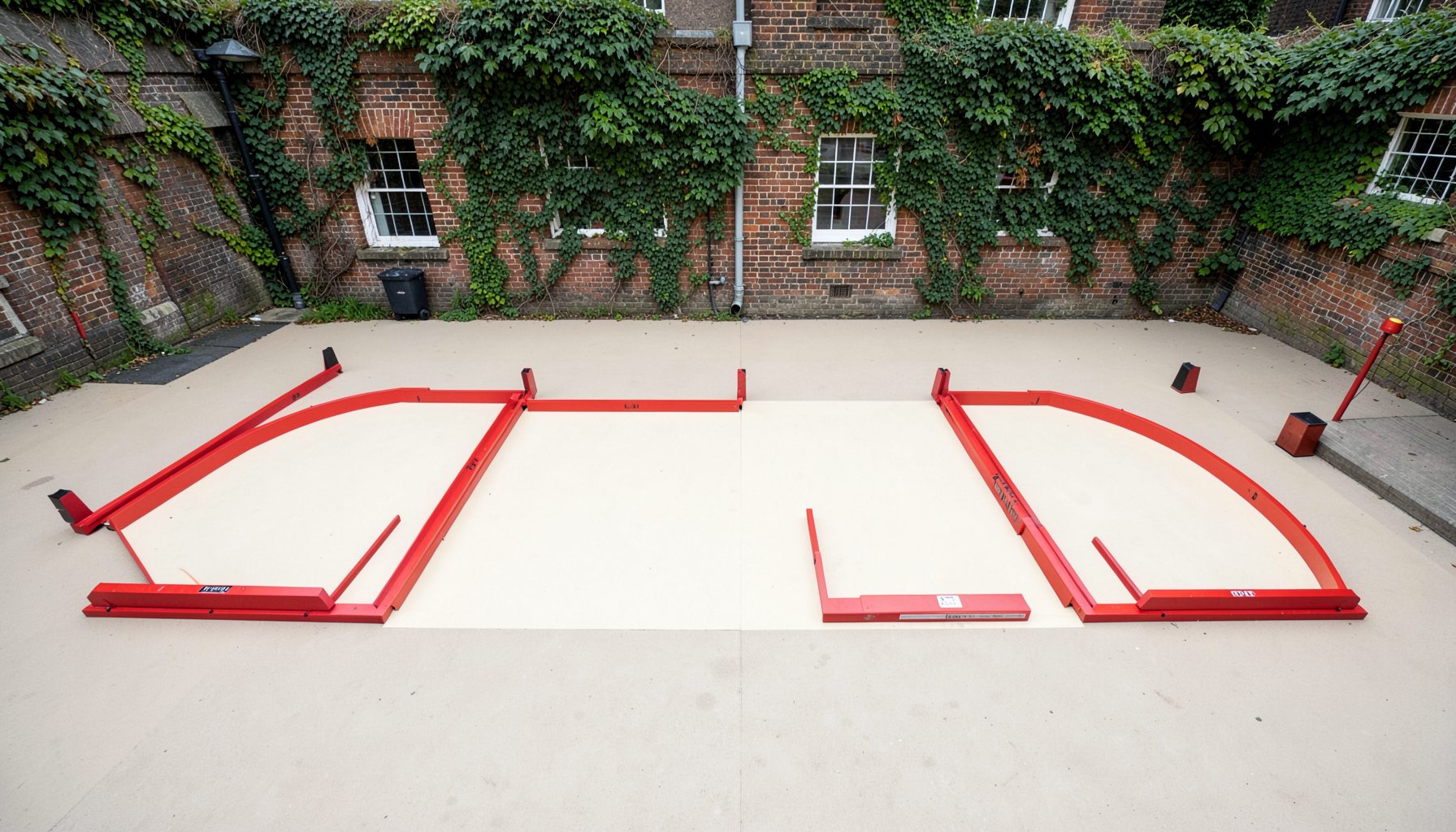
Historic Rugby Fives courts shaped how the game developed at both universities. The enclosed space creates a fast contest in which players must read rebounds, control the front wall and make decisions in tight quarters. Court condition, wall dimensions and maintenance can influence the character of play, making the preservation of facilities especially important.
University sport, however, is always exposed to institutional change. Buildings are repurposed, student numbers shift and competing activities claim time and funding. A court can survive physically while losing its regular users, or a strong club can continue even when access becomes difficult. The history of Rugby Fives at Oxford and Cambridge therefore includes periods of renewal as well as stability.
That issue has a direct Australian parallel. A court in a Melbourne school or a Sydney university may be surrounded by newer facilities for futsal, basketball or squash, while a Brisbane club may need to schedule play around heat, humidity and limited indoor space. Clear local records, committed coaches and links with schools can make the difference between a heritage sport that remains active and one that becomes merely an architectural footnote.
From university heritage to a national future
Oxford and Cambridge helped Rugby Fives gain status, but the sport’s survival has always depended on a much wider network. Schools introduced players, clubs provided regular competition, and national organisations connected local fixtures with championships, rankings and historical records. University alumni often continued to support those structures long after leaving campus.
The Rugby Fives Association carries that work into the present by supporting competitions, coaching, school programmes and community participation. Its role is especially important for a sport with varied local histories. Preserving an old result, finding a coach for beginners and helping a new club understand the rules are all parts of the same long-term task.
For Australians, the Oxford and Cambridge story offers a useful model rather than a distant curiosity. A sport can grow when schools, universities and community clubs share facilities, knowledge and players. Partnerships with independent schools, university recreation departments and existing racquet-sport communities can create practical entry points, whether the programme begins in Adelaide, Perth, Canberra or regional New South Wales.
The history of Rugby Fives at Oxford and Cambridge shows how tradition becomes sustainable: players inherit a game, organisers give it structure, and each generation leaves reliable records for the next. The RFA welcomes readers who want to explore the sport’s archives, locate opportunities to play, support school and university programmes, or help build its future across the UK and beyond.