



The History Of Rugby Fives At Your Local Club
Every Rugby Fives court has a story. Its walls have witnessed school matches, club championships, first fixtures, friendly games, coaching sessions and generations of players discovering the speed and precision of the sport. The history of a local club is therefore more than a list of winners. It is a record of places, people and traditions that have kept Rugby Fives active.
Rugby Fives developed from the handball game associated with Rugby School and spread through schools, universities, military institutions and independent clubs. As courts appeared in different parts of the country, each community gave the sport its own character while following the shared principles of movement, timing, touch and control.
Researching that story can reveal how a club was founded, who built its court, which schools supplied early players and how competitions changed over time. Old fixture cards, photographs, minute books and memories from former members can turn a familiar court into a valuable piece of sporting heritage.
How Rugby Fives Reached Local Courts
The name Rugby Fives comes from Rugby School, where a distinctive form of handball was played against a court wall and buttress. The game gradually developed its own techniques and conventions. Its appeal lay partly in its simplicity: players needed a suitable court, a ball and an understanding of the service and return, rather than extensive equipment or a large playing area.
During the nineteenth and early twentieth centuries, the sport travelled through educational networks and professional connections. Former pupils carried their enthusiasm to other schools, universities, armed forces establishments and towns. Teachers and coaches introduced the game to new groups, while players often helped establish clubs near their homes or workplaces.
A local court may therefore reflect several strands of Rugby Fives history. It might have begun as part of a school campus, been added to a sports club, or survived as one of a small number of courts maintained by a dedicated community. Finding the earliest reference to the court can establish when that wider national story became part of local life.
The Court As A Historical Record
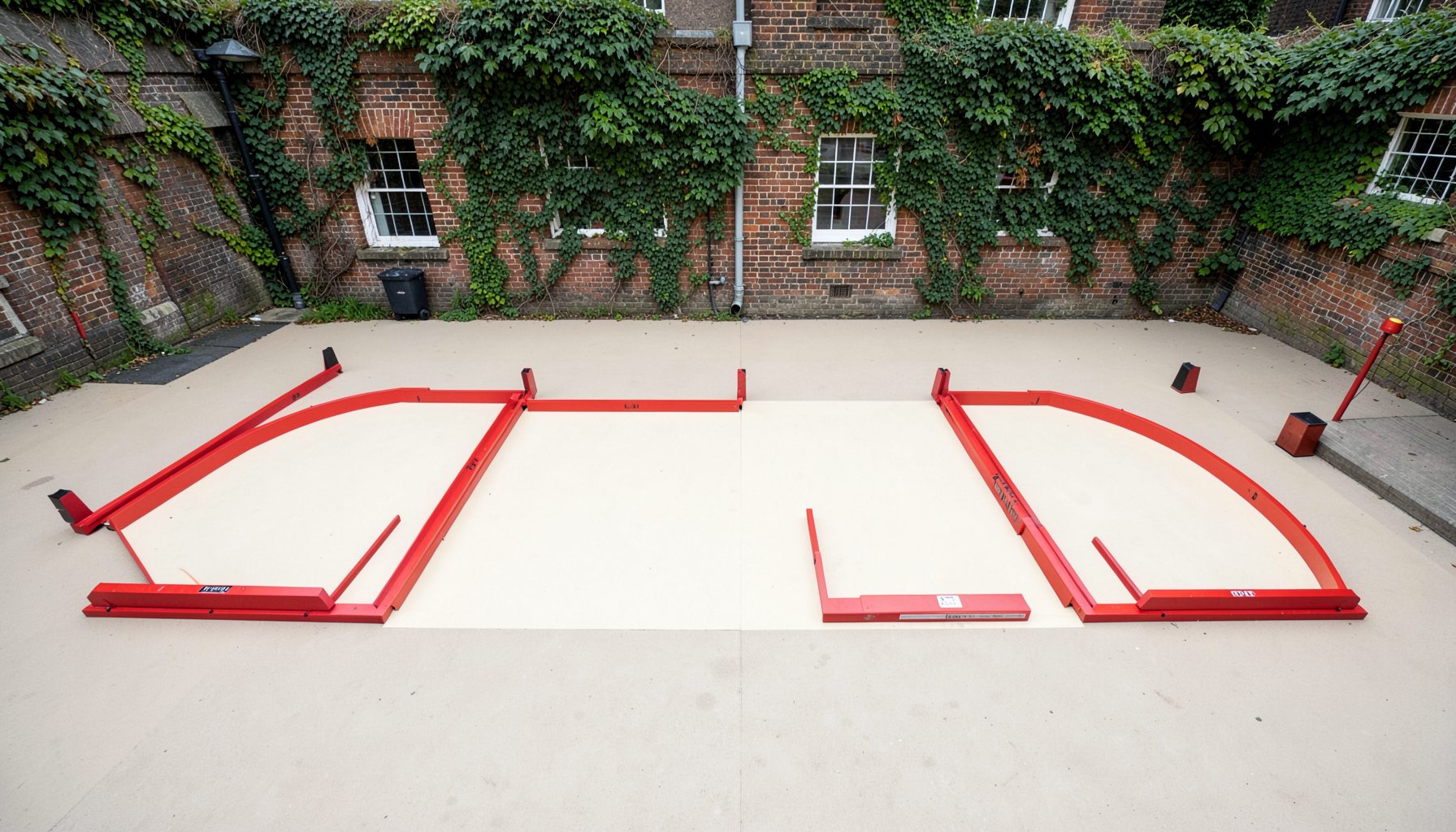
The structure itself can provide important clues. Court design, wall markings, flooring, lighting and later repairs may indicate different phases of use. Some venues retain original features, while others have been adapted to meet modern safety standards or to accommodate changing expectations around access and maintenance.
Architectural evidence should be recorded carefully rather than treated as proof on its own. A plaque may give a construction date, but a later renovation could have altered the playing surface. Building plans, school governors’ minutes, local newspapers and planning records can help establish when a court was commissioned, opened, extended or restored.
The position of the court also matters. A venue beside classrooms may point to a strong school programme, while a court within a wider sports complex may show how Rugby Fives shared space with other activities. Changes to nearby buildings can explain periods of growth, decline or relocation in the club’s history.
The People Who Built The Club
Players are central to any account of a Rugby Fives club, yet the wider volunteer network deserves equal attention. Secretaries arranged fixtures, treasurers paid for repairs, coaches introduced beginners, and grounds staff kept courts playable. A club’s continuity often depended on people whose names appear only briefly in committee minutes or handwritten fixture books.
Early membership lists can show how participation developed. They may reveal links between a school and an adult club, the arrival of players from another region or the impact of a new coaching programme. Results also help trace competitive standards, rivalries and the emergence of regular local tournaments.
Oral history adds detail that formal records leave out. Former members may remember unusual court features, long-running traditions, memorable matches or the way beginners were welcomed. Such accounts should be dated and compared with written sources, since memories can merge events over time. Their value lies in the personal experience they bring to the club archive.
From School Tradition To Community Sport
Many local Rugby Fives clubs grew from school participation. A pupil may have continued playing at university, returned as a teacher or coach, and encouraged a new generation. This pattern helped carry skills and enthusiasm between institutions while giving clubs a reliable source of new players.
The relationship between schools and clubs has often changed. Some school courts became less active as timetables, facilities or sporting priorities shifted. In other places, clubs responded by offering coaching, open sessions and competitions that made the court available to people beyond the original institution.
This community dimension is an important part of the sport’s development. A club may have hosted charity matches, junior events, women’s competitions, veterans’ fixtures or inter-club tournaments. These activities show how Rugby Fives has adapted while retaining its distinctive identity and connected style of play.
Sources That Help Reconstruct The Past
No single document is likely to tell the whole story. A strong local history brings together official records, sporting evidence and personal recollections. Dates in one source can be checked against reports in another, producing a clearer timeline of the court and its players.
| Source | Useful date clues | What it may reveal | Point to check |
|---|---|---|---|
| Club minute books | Meetings, elections, repairs | Founding decisions, officers and priorities | Missing volumes can leave gaps |
| Fixture cards and scorebooks | Match seasons and opponents | Competitions, rival clubs and active periods | Results may use abbreviations |
| Local newspapers | Opening events and reports | Public interest, champions and notable matches | Coverage may favour major fixtures |
| Photographs and programmes | Clothing, court features and event dates | Team identity, facilities and tournaments | Captions may have been added later |
| Oral history interviews | Personal playing years | Customs, coaching and community memories | Memories should be cross-checked |
| School or venue records | Construction and ownership dates | Links between institutions and the club | Access may require permission |
Digital collections can make research faster, but an online reference should lead back to a reliable source where possible. Scan documents at a useful resolution, preserve original wording and note the location of every item. A simple archive catalogue will help future players understand what has been collected and where it came from.
Protecting A Living Sporting Heritage
Preserving Rugby Fives history does not mean treating the club as something fixed in the past. A current junior session, a new coaching initiative or an inclusive tournament becomes part of the next chapter. Recording today’s activities can prevent future researchers from facing the same gaps that affect older club histories.
Clubs can create a small digital and physical archive containing constitutions, newsletters, tournament programmes, photographs, rankings, results and court maintenance records. Personal data should be handled responsibly, especially when publishing images or interviews. Permission, clear file names and regular backups are simple safeguards.
The Rugby Fives Association provides a wider national context through its work with clubs, schools, players, coaches and volunteers. Local material becomes more meaningful when connected to national competitions, championship results, club networks and the broader development of the sport across the UK.
A Practical Way To Start Your Club Archive
Begin with a focused project rather than trying to document everything at once. A timeline covering the court’s construction, the club’s first fixtures, major tournaments, periods of closure and significant refurbishments can provide a useful framework. Each addition can then be supported by a document, photograph or recorded recollection.
- Appoint a volunteer or small group to catalogue existing records.
- Search club minutes, school archives, newspapers and local history collections.
- Interview former players, coaches, officials and court caretakers.
- Digitise photographs, fixture lists and programmes while preserving originals.
- Share verified milestones with the Rugby Fives Association and current members.
A public display, anniversary booklet or club website feature can bring the research back to the people who created the history. It can also encourage former members to contribute material that has been stored in homes, attics and personal folders for decades.
Your local court is part of the continuing story of Rugby Fives. Walk through its records, speak to its community and preserve the evidence of every generation that has played there. Contact the Rugby Fives Association, connect with your club’s archive project and help ensure that the next chapter is recorded as carefully as the last.