



From School Courts to National Finals
Rugby Fives has a distinctive place in British sporting history. Played against a four-sided court, with a gloved hand replacing a racket, the game developed from the traditions of Rugby School and gradually spread to schools, universities, clubs, and community courts throughout the country. Its compact playing area encourages quick reactions, controlled footwork, and tactical intelligence.
The National Rugby Fives Championships reflect that journey. They are more than an annual competition: they preserve the sport’s records, bring generations of players together, and provide a visible pathway from school participation to elite performance. Across nearly a century, the championships have adapted to changes in the game while retaining the character that makes Rugby Fives distinctive.
The Rugby Fives Association has played a central role in sustaining this history. As the national governing body, it administers competitions, supports clubs and coaches, maintains results and rankings, and works with schools and volunteers to keep the sport active across the UK.
Origins Of A National Competition
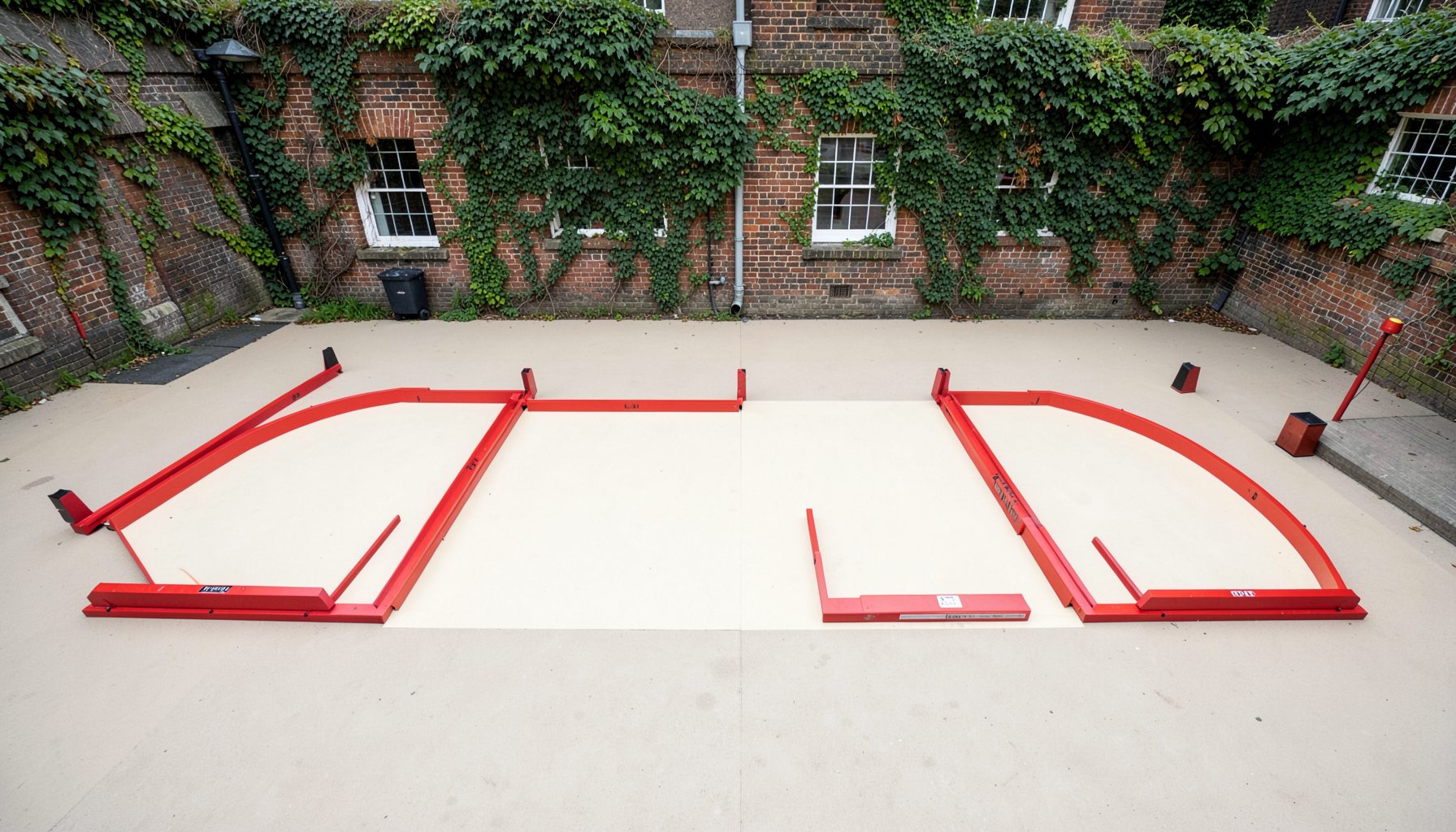
Rugby Fives began at Rugby School, where versions of handball were played against the walls of the school buildings during the nineteenth century. The sport took its name from the school, but its appeal soon extended beyond the original setting. Former pupils introduced it to other schools and institutions, helping establish a network of courts and local fixtures.
A formal national championship emerged in the 1920s. The first National Singles Championship is generally dated to 1925, giving leading players a regular opportunity to meet under common rules. At that stage, the tournament was closely associated with Rugby School, whose courts and traditions provided a natural home for the event.
The creation of the Rugby Fives Association in 1929 strengthened the sport’s national structure. An organised governing body could coordinate fixtures, clarify regulations, promote championships, and record the achievements of competitors. Those early administrative steps created the foundations for the modern competition calendar.
Building The Championship Tradition
The early championships established singles as the clearest test of individual skill. Players had to cover every part of the court, create angles from difficult positions, and maintain accuracy under intense pressure. Since rallies can change rapidly, success depended on anticipation as much as power.
Doubles competition added a different dimension. Partnerships required communication, court awareness, and a shared understanding of when to attack or defend. The national doubles championship became an important part of the competitive programme, broadening the opportunities available to established players and giving the sport a richer tactical identity.
The championship record also reveals the strength of institutional links. Rugby School remained a major centre, while other schools, universities, and clubs produced competitors capable of challenging the traditional strongholds. This movement between educational and club settings helped Rugby Fives develop as a national rather than purely school-based sport.
War, Recovery, And Continuity
Like many British sporting competitions, the championships were affected by the two world wars. Fixtures and tournaments could be reduced, suspended, or reorganised when players were serving, travel was restricted, and courts were unavailable. The gaps in the historical record are part of the wider story of how clubs and schools protected the game during difficult periods.
The return of regular competition depended on volunteers, teachers, former pupils, and club organisers. Courts needed maintenance, players had to be recruited, and fixtures had to be rebuilt. The survival of championship traditions after wartime disruption demonstrated the commitment of the Rugby Fives community.
Post-war development also brought a broader understanding of participation. The sport continued to benefit from its school connections, but club structures became increasingly important. Competitors could remain involved after leaving school, while experienced players could pass on technique and tactical knowledge through coaching and informal practice.
Expanding The Competitive Field
The history of the national championships is also a history of wider participation. Women’s competition gained greater visibility as more schools, universities, and clubs supported female players. Women’s singles and doubles events helped establish a stronger competitive pathway and ensured that championship honours reflected the growing contribution of women to Rugby Fives.
Age-group and veterans’ events further extended the playing life of competitors. A player might begin through a school programme, move into senior club competition, and later continue through masters or veterans’ categories. This continuity is one of the sport’s particular strengths: championship involvement does not have to end when a player leaves full-time education.
The modern tournament landscape includes national singles and doubles events alongside school, university, youth, and veteran competitions. Some events are hosted at Rugby School, while others depend on the availability and condition of courts across the country. Together, they create a competitive network rather than a single isolated final.
| Championship strand | Main purpose | Contribution to the sport |
|---|---|---|
| National singles | Test individual movement, control, and consistency | Identifies leading all-round players |
| National doubles | Reward partnership play and tactical coordination | Strengthens club and school connections |
| Women’s events | Provide high-level competition for female players | Supports inclusion and a broader talent pathway |
| Schools competitions | Introduce pupils to organised fixtures | Connects participation with future club play |
| University and club events | Maintain competition beyond school | Sustains adult playing communities |
| Veterans’ competitions | Encourage long-term involvement | Preserve experience and sporting traditions |
Records, Rivalries, And Memorable Courts
Championship history lives in more than winners’ names. Results, draws, photographs, programmes, court renovations, and personal recollections all help explain how Rugby Fives has changed. A list of champions can show periods of dominance, the rise of new clubs, and the influence of particularly successful schools or universities.
Rivalries have often developed through repeated meetings between strong players and established institutions. These contests give the championship its sporting drama, but they also raise standards. Players learn from different styles, coaches refine preparation, and younger competitors see a route from local fixtures to national finals.
The courts themselves are part of the historical record. Rugby Fives depends on specialised facilities, and every active court represents investment by a school, club, charity, or community. When courts are restored or new facilities become available, the effect reaches beyond one venue: more coaching sessions, junior programmes, social games, and competitive fixtures become possible.
The Association’s Role Today
The Rugby Fives Association provides the framework that allows the championships to continue. Its work includes competition administration, fixtures, rankings, results, coaching support, school development, and communication between players and clubs. This practical organisation is essential for a sport whose facilities and playing communities are distributed across the country.
The association also protects historical knowledge. Accurate championship records give current players a connection with earlier generations, while archived results help researchers, families, clubs, and schools understand their place in the sport. Maintaining that information is especially valuable for a specialist game with a small but dedicated national community.
Development work ensures that tradition does not become a barrier. Coaching resources, outreach projects, inclusive participation, and school programmes can introduce Rugby Fives to people with no previous connection to the game. The championship then becomes part of a complete pathway: discover the sport, learn its skills, join a club, compete locally, and progress to national events.
Carrying The Story Forward
The future of the championships will depend on participation and facilities as much as on the excellence of finalists. Schools need support to keep courts active, clubs need volunteers to organise fixtures, and young players need accessible coaching. A healthy national competition requires a broad base of regular players.
Ways to support the next chapter include:
- Join a local Rugby Fives club or attend an introductory session
- Encourage schools to include court sports and Rugby Fives in their activities
- Volunteer with fixtures, championships, coaching, or event administration
- Help preserve photographs, programmes, scorecards, and family records
- Follow the Rugby Fives Association for competitions, rankings, and development news
The history of the National Rugby Fives Championships remains a living record. Every match adds to it, whether played by a first-time school competitor, a long-established club player, or a returning veteran. Support the Rugby Fives Association, take part in the playing community, and help ensure that the next generation can experience the speed, skill, and traditions of the national game.