


Singles And Doubles Rugby Fives Explained
Rugby Fives is played on a compact court with a front wall, side walls, and a hard floor that rewards sharp reactions, accurate hand shots, and intelligent movement. The same basic equipment and court can support either one-against-one or two-against-two competition, yet the experience changes significantly when a second player joins each side.
Singles places the full responsibility for every rally on one player. Doubles introduces partnership tactics, shared court coverage, communication, and carefully defined roles. Players may use similar strokes in both formats, but they must read the ball, position themselves, and build points in different ways.
Understanding these distinctions helps new players choose appropriate training goals and allows experienced competitors to adapt their game. It also explains why success in singles does not automatically transfer to doubles, or why a strong doubles partnership may need to adjust its habits when entering a singles championship.
The Basic Shape Of Each Game
In singles Rugby Fives, one player covers the entire playable area. Every serve, return, volley, defensive recovery, and attacking shot depends on individual movement and judgement. A player must be ready to reach balls directed into either side of the court and recover quickly after each strike.
Doubles divides the responsibility between two teammates. The pair must avoid leaving gaps while making sure both players have a clear route to the ball. A well-organised partnership generally works with a forward player taking shorter attacking opportunities and a rear player protecting deeper or wider areas, although positions shift continuously during a rally.
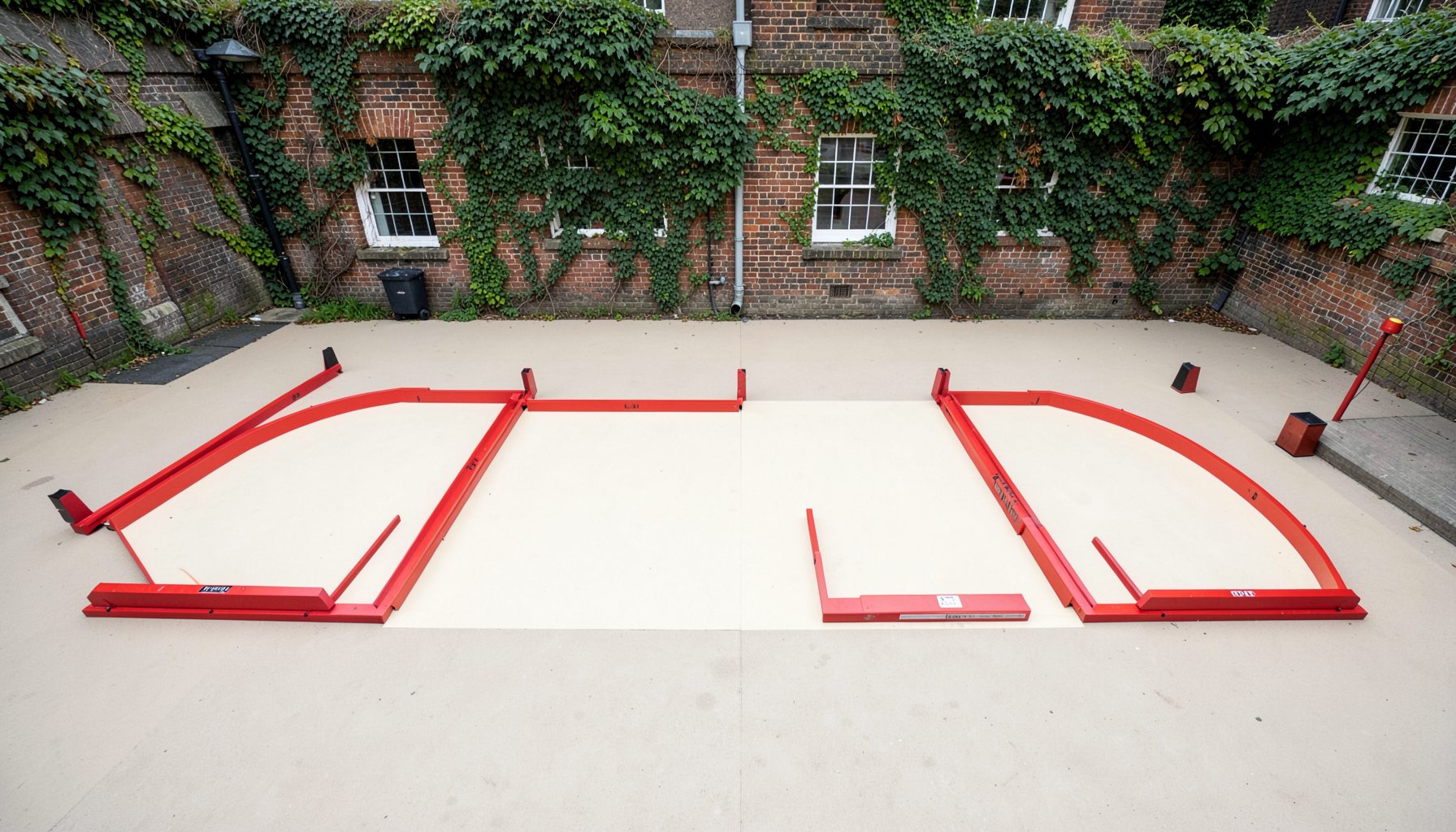
The court itself does not become larger for doubles. That makes movement and spacing especially important. Two players have more reach collectively, but they can also obstruct one another or leave an uncovered angle if their formation breaks down.
Court Coverage And Movement
Singles demands broad court coverage. A player may need to move from one side wall to the other, recover from a low shot, and still be prepared for a fast rebound from the front wall. Efficient footwork matters because wasted steps quickly create fatigue and leave the player late to the next ball.
The singles player also has to balance attack and recovery alone. A forceful shot can put an opponent under pressure, but it may leave the striker out of position if the return comes back quickly. Good players therefore think about where they will finish after each shot, rather than focusing only on the quality of contact.
Doubles movement is more compact but more precise. Partners need to maintain useful distance, avoid standing on the same line, and rotate when one player is drawn forward. Communication can be brief and practical, helping teammates decide who will take a difficult ball without hesitation.
A doubles team that moves as a connected unit can make the court feel crowded for opponents. A pair that chases independently creates open spaces and may give away points through collisions, missed calls, or late reactions.
Serving And Returning Under Pressure
The serve is important in both formats because it begins the rally and can establish control of the court. In singles, the server must judge placement according to the opponent’s movement and own recovery position. A well-directed serve can make the return awkward, but the server still has to prepare for every possible reply.
The receiver in singles has no partner to cover a weak return. That makes the first shot particularly important: a controlled return can restore balance, while an inaccurate or short ball may give the server an immediate attacking opportunity.
In doubles, the serve and return involve more than two individual decisions. The server aims to create a difficult first contact while keeping the partner in a position to support the next exchange. The receiving pair must decide who is best placed to take the ball and how the second player should cover the likely reply.
| Feature | Singles | Doubles |
|---|---|---|
| Players on court | One per side | Two per side |
| Court responsibility | One player covers every area | Partners divide and share coverage |
| Communication | Internal decision-making | Calls and agreed signals assist movement |
| Main physical demand | Endurance, recovery speed, and all-round reach | Acceleration, positioning, and coordinated movement |
| Common tactical priority | Create space and exploit the opponent’s weakness | Move opponents while preserving partnership shape |
| Main risk | Becoming exposed after an attacking shot | Leaving gaps or interfering with a teammate |
Competition rules, scoring systems, and event formats are set by the relevant governing body or tournament organiser. Players should check the current Rugby Fives Association regulations before an organised match, particularly where serving procedures or doubles positioning requirements apply.
Tactical Differences In Rally Construction
Singles rallies often revolve around creating and exploiting space. A player may use width, changes of height, pace variation, or a well-timed volley to force the opponent away from a central recovery position. Since there is only one defender, every successful displacement has a direct effect on court coverage.
Patience is valuable in singles. A player who tries to finish every rally immediately can make errors or surrender position. Keeping the ball difficult to attack, then taking an opening when it appears, is often more reliable than constant high-risk striking.
Doubles tactics are built around pressure on the partnership rather than one individual alone. A team may direct the ball between opponents, force one player forward, or target the space behind a moving teammate. The best shot is often the one that creates uncertainty about who should play it.
Partnerships also need a shared tactical language. Before a match, players can agree who usually takes central balls, how they respond to a lob or short return, and when they switch positions. These plans should remain flexible because rallies rarely follow a fixed pattern.
Skills That Transfer And Skills That Change
Hand-eye coordination, timing, balance, and the ability to strike the ball cleanly are essential in both formats. Players in either game need to read rebounds from the front and side walls, control their body position, and recover quickly after contact.
Singles places greater emphasis on aerobic fitness, repeated changes of direction, and independent tactical judgement. Training should include full-court movement, defensive retrieval, serve-return patterns, and drills that require a player to make decisions while tired.
Doubles places greater emphasis on communication and anticipation. Partners should practise moving without crossing paths, calling for the ball clearly, and recovering into complementary positions. Conditioned games in which a pair must complete a certain number of controlled shots can improve patience and coordination.
A player who moves from singles to doubles may initially over-cover the court or hold the ball too long. A doubles specialist moving into singles may expect support that is no longer available. Adaptation comes from recognising which habits belong to the format and which are genuine strengths.
Choosing The Right Format For Development
Singles is a strong test of individual completeness. It reveals weaknesses in stamina, shot selection, movement, and defensive discipline because there is no teammate to compensate for an incomplete skill set. It can also build confidence in making decisions under pressure.
Doubles offers a valuable route into competitive Rugby Fives for players who enjoy teamwork and shared problem-solving. It teaches participants to communicate, read the developing rally, and contribute even when they are not the player making the current shot.
Both formats support long-term development. Schools and clubs can use singles to build personal technique and court awareness, then introduce doubles to develop tactical variety and social connection. Coaches can also vary pairings so players learn how different styles affect positioning and strategy.
Players preparing for a competition should consider the demands of the event rather than relying only on their preferred format. A singles competitor may need extra work on endurance and retrieval, while a doubles pair may benefit most from rehearsing serves, returns, calls, and movement patterns.
Practical Priorities For Players And Coaches
The most effective training programme combines technical practice with realistic decision-making. Repeating a stroke in isolation has value, but players must also learn when to use it, where to recover, and how the opponent’s position changes the available options.
Clubs, schools, and coaches can make both formats accessible by adapting drills to age, experience, and confidence. Short rallies, rotating partners, and clear court-safety rules allow beginners to develop skills without becoming overwhelmed by the speed of a full competitive match.
- Build singles sessions around recovery steps, court coverage, and independent shot selection.
- Use doubles drills to practise calling, spacing, rotation, and responsibility for central balls.
- Train the serve and first return as linked actions rather than separate technical exercises.
- Review rallies for positioning errors, not just missed contacts or unforced mistakes.
- Rotate partners regularly so players develop adaptable communication and tactical awareness.
A balanced programme gives players opportunities to compete in both forms of Rugby Fives. It develops versatile athletes while strengthening the club or school environment through cooperation, peer learning, and shared competition.
Rugby Fives rewards players who combine courage with control. Singles sharpens individual responsibility; doubles adds partnership intelligence and coordinated pressure. Exploring both forms can improve hand skills, movement, tactical awareness, and enjoyment of the sport.
Find a Rugby Fives Association club, school programme, competition, or coaching opportunity and put these differences into practice on court. Participate, support your teammates, and help grow Rugby Fives across the UK.