



The Enduring Legacy of Rugby Fives in Northern England
Rugby Fives is one of those rare sporting traditions that has quietly outlasted trends, surviving wars, recessions and the relentless march of professionalised leagues. In the north of England, where many of its strongest clubs and oldest courts remain, the sport carries a particular cultural weight. It is a game that thrives on handshake culture, fusty changing rooms, and a calendar of fixtures that has barely shifted since the Victorian era.
For an Australian reader who has grown up around surf lifesaving clubs, suburban footy ovals, and the banter of a Saturday arvo grand final, the parallels are surprisingly close. Both nations share a fondness for community-run competitions where volunteers run the canteen, mark the lines, and argue about the draw well into the evening. The northern English clubs that still host Rugby Fives each winter belong to that same broad family of grassroots pastimes.
| Region | Notable Club(s) | Era of Peak Activity | Distinctive Feature |
|---|---|---|---|
| Yorkshire | Leeds, Harrogate, Sedbergh | Late 1800s – present | Strong public school pipeline |
| Lancashire | Manchester, Liverpool, Preston | Early 1900s – mid-20th century | Industrial league tradition |
| Cumbria | Kirkby Stephen, Appleby | Interwar period | Rural tournament circuit |
| Northumberland | Newcastle, Morpeth | Post-1945 revival | University-led expansion |
| Durham | Barnard Castle, Durham City | Continuous since 1870s | Oldest surviving fixture list |
Northern origins and the birth of a code
The story of Rugby Fives begins not on a manicured lawn but in the courtyards and alleyways of public schools in the mid-nineteenth century. Rugby School, after which the game takes its name, refined the rules that distinguish it from Eton Fives, its older sibling. Northern players quickly adopted the format, with Yorkshire and Lancashire clubs forming by the 1870s. The hard, unforgiving walls of an enclosed court suited the regional weather and the local temperament: resilient, abrasive, and rarely given to fuss.
What separated the northern adoption from the south was the speed of community uptake. While southern clubs remained tethered to fee-paying schools, northern clubs opened their doors to factory workers, clerks and miners. By the early twentieth century, a Saturday afternoon match in Leeds or Salford was as much a social fixture as a sporting one, with entire neighbourhoods turning out to watch.
Schools, leagues and the pipeline of talent
The school system in the north has always been Rugby Fives' most reliable recruitment engine. Sedbergh, Ampleforth, Barnard Castle and a handful of grammar schools across Yorkshire and the North East have produced generation after generation of county-level players. Many of these institutions still run inter-house competitions, with the winners' names carved into wooden boards that have yellowed with age.
In Australia, the pathway looks different. Talent identification in sports like Australian rules or cricket runs through club academies and state squads, with parents ferrying kids to training in the back of a station wagon. Rugby Fives in England retains something of the old-school charm: a teacher who played in the 1980s, a court tucked behind the chapel, and a fixture list pinned to a corkboard. The two systems could hardly be more different in structure, yet both rely on the same quiet dedication of volunteers who keep the lights on.
Northern rivalries and championship tradition
Ask anyone connected with Rugby Fives where the fiercest rivalries live and they will point north without hesitation. The Yorkshire versus Lancashire encounters carry the same tribal energy as an Ashes Test, only with fewer television cameras and more tea urns. Championship weekends rotate between host clubs, and northern venues often draw the largest crowds because of the deep regional bragging rights at stake.
The Under 25 and veterans' championships have become showcases for these traditions. Players who first squared off as teenagers return decades later, slower but no less competitive, to renew acquaintances over a post-match pint. Australian readers who have witnessed the tribal pull of a State of Origin match, or the bitter heritage fixtures between clubs like Fitzroy and Collingwood, will recognise the emotional architecture instantly.
Community, identity and the social fabric
Beyond the trophies and rankings, Rugby Fives in the north has long served as a social adhesive. Clubs in towns like Skipton, Ilkley and Altrincham host annual dinner dances, junior tournaments, and mixed-doubles evenings that bring together people who might never meet elsewhere. The sport is particularly welcoming to women players, a tradition that pre-dates many equivalent ball sports in the region.
The volunteer base mirrors what you find at an Australian surf club or a suburban P&C committee. Parents, retirees and former players give up weekends to referee, sweep courts, and run the bar. The sums raised often pay for junior coaching or subsidised travel to away fixtures, keeping the doors open for newcomers who could not otherwise afford to play.
Modern resurgence and the next generation
The last fifteen years have seen a quiet resurgence. New courts have appeared at universities in Newcastle and Durham, while inner-city programmes in Manchester and Leeds have introduced the game to children who had never seen a fives ball. Social media and short-form video clips have helped, particularly with players in their twenties who want something different from the usual five-a-side pitch on a Tuesday night.
Australian clubs exploring niche heritage sports might learn a trick or two from this grassroots marketing. Instead of polished advertising, northern clubs rely on community WhatsApp groups, low-fi Instagram reels filmed on a coach's phone, and word of mouth in the local pub. It is rough, honest, and strangely effective, much like the sport itself.
Court care and the long view
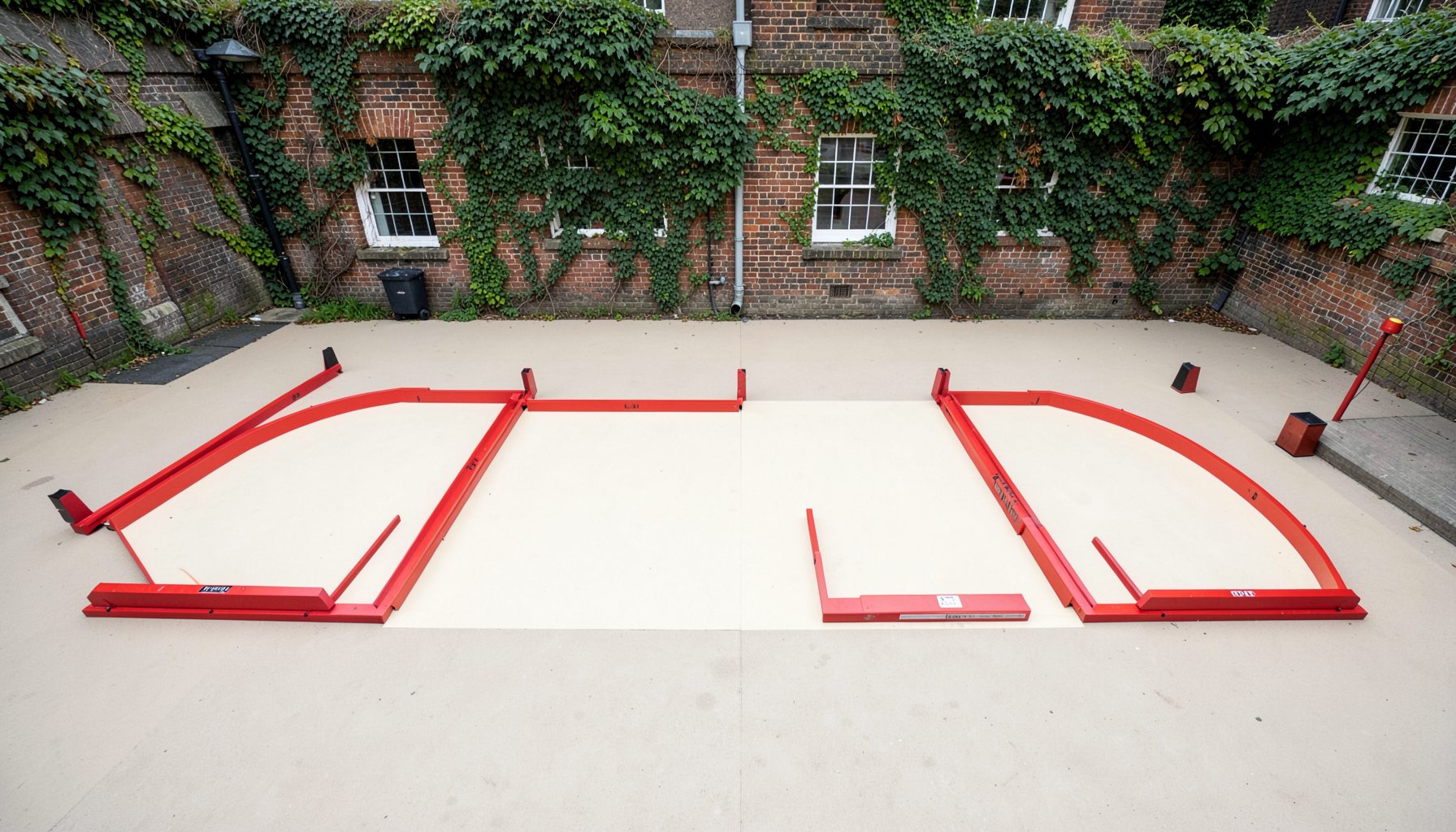
A fives court is a brutal environment. The hard ball strikes the front wall thousands of times in a single afternoon, the granite or concrete surface wears down over decades, and the markings fade under the onslaught of boots and weather. Clubs that want to play fifty years from now must look after their courts today, and a practical seasonal maintenance checklist has become essential reading for any volunteer committee.
Northern clubs have generally led the way on this kind of practical stewardship. From repainting lines before the autumn rains to inspecting the roof timbers each spring, the rhythms of court care are passed down much like the rules of the game. A court that is properly maintained becomes a community asset in its own right, used by schools, walkers, and local historians as much as by players.
If the story of Rugby Fives in Northern England has anything to teach Australian sporting communities, it is that legacy is not handed down from on high. It is built, week by week, by volunteers wiping down benches, by teachers driving minibuses to away fixtures, by old players showing teenagers how to grip the ball. Anyone interested in supporting the sport, learning the rules, or finding their nearest court can visit the Rugby Fives Association online, follow the national championships, or simply turn up at a club on a Saturday and ask for a game. The doors, as they have done for more than a century, remain open.