


The Referee’s Role In Rugby Fives
A Rugby Fives referee is responsible for much more than announcing the score. The official protects the flow of the game, applies the laws consistently, and creates an environment in which players can compete with confidence. For a new official, the role combines observation, judgement, communication and a sound understanding of court etiquette.
Rugby Fives is played against a front wall, usually on a four-sided court, with players striking the ball with their hands. The speed of a rally can make decisions difficult, particularly when the ball travels close to a line or a player’s movement affects an opponent. A referee must therefore watch the rally as a complete sequence rather than focus only on the final shot.
Australian officials may encounter a small but growing playing community, school fixtures and competitions separated by considerable distance. A referee might travel from Melbourne to a regional school, cover a weekend tournament in Sydney, or work with a club that relies heavily on volunteers. Clear preparation matters when experienced officials are not always available locally.
The best approach is calm, neutral and practical. Players should hear a decision promptly and understand what it means. You do not need to dominate the court; you need to make the contest fair, safe and easy to follow.
Prepare Before Stepping Onto The Court
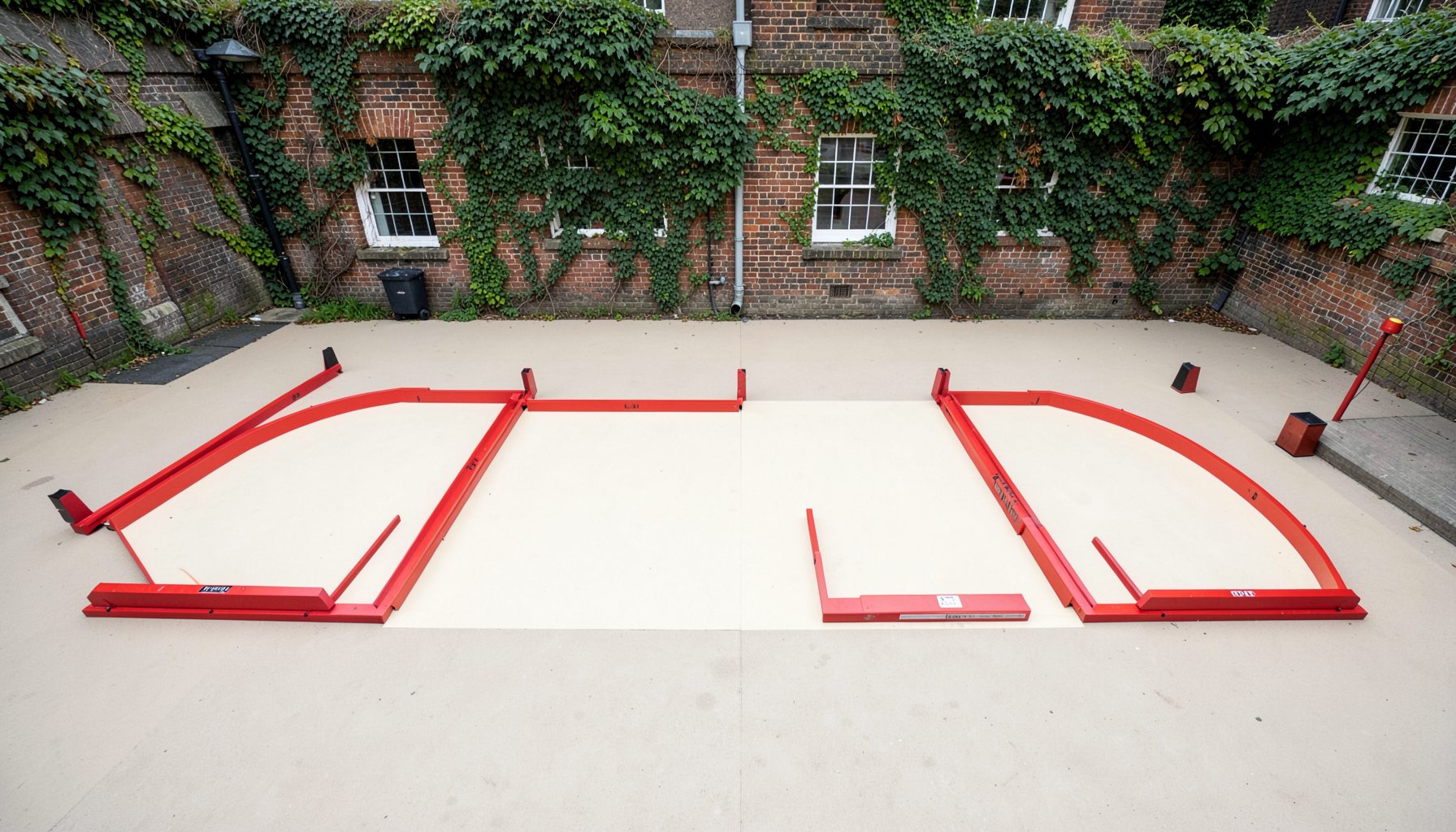
Arrive early enough to inspect the court, confirm the competition format and speak with both players or pairs. Check the walls, floor, lines, lighting and any areas that could create a safety concern. A loose fitting, wet patch or obstructed viewing position should be dealt with before the first serve.
Review the current laws and the specific event conditions. Scoring, serving arrangements, warm-up time and procedures for disputed decisions may differ between a club match, a school fixture and a championship. The Rugby Fives Association’s published rules and tournament instructions should take priority over habits picked up from another venue.
Introduce yourself briefly and explain how you will communicate calls. Establish who will serve first according to the applicable procedure, then make sure both sides know the score format. In Australia, where players may use casual language such as “mate” on court, a friendly manner is welcome, but the referee must remain equally formal and impartial towards both sides.
Understand Positioning And Sightlines
A referee needs a position that gives a clear view of the front wall, relevant lines and the players’ movement. Stand where you can follow the ball without obstructing a player’s approach. Your exact location may change during a rally, but unnecessary movement can make it harder to judge whether a ball was legal or whether interference occurred.
Sightlines are especially important when the ball travels low or close to a side wall. Watch the ball’s path, the point of contact and the opponent’s opportunity to play it. If your view is blocked, do not guess confidently. Pause when the rules allow, use the correct procedure for an uncertain decision, and record the incident mentally so that similar situations are handled consistently.
A chair or raised position may be used at some venues, while others require the referee to stand at court level. Before the match, identify where you can see the service area and the principal lines. A strong position reduces arguments because your decision is based on a complete view rather than a late reaction.
Make Clear And Consistent Calls
The referee’s voice should be audible without becoming theatrical. Use short, recognised terms for faults, outs, lets, interference and the score. Give the call as soon as the rally has ended and avoid adding a long explanation while players are preparing for the next point.
Score accurately and repeat it in the same order every time. If the scoring system uses a server’s score first, maintain that convention throughout the match. Keep a written score sheet where required, especially in tournaments where results, rankings and historical records depend on accurate reporting.
Consistency matters more than making every call look dramatic. A borderline decision should be treated according to the same standard used earlier in the match. If you realise that you made an error, acknowledge it promptly and apply the relevant correction procedure rather than trying to conceal it. Players generally accept an honest correction more readily than an uncertain argument.
Judge Serves, Rallies And Interference
The serve deserves concentrated attention because it starts every point and can involve several conditions. Check the server’s position, the legal striking action, the ball’s route and the required landing area. Do not become distracted by the receiver’s movement before the ball has completed the relevant part of the serve.
During a rally, decide whether the ball reaches the front wall legally and whether it lands within the boundaries required by the laws. Watch for a ball that touches a line, fails to reach the front wall or is played after an illegal bounce. When local rules contain technical details, keep the rulebook available during breaks rather than relying on memory.
Interference requires judgement. A player may move into a position that limits an opponent’s swing, blocks access to the ball or creates a risk of contact. Consider whether the opponent could have made a reasonable play and whether the obstruction was avoidable. Depending on the circumstances and the applicable rules, the correct outcome may be a let, a fault or a point.
Safety takes priority over an exciting rally. If players are close together and a swing could cause injury, intervene decisively. Do not wait for contact before stopping dangerous play.
Manage Conduct Without Escalating Tension
A referee should set expectations early through professional behaviour. Watch for deliberate delays, repeated disagreement, distracting comments, aggressive gestures or conduct that compromises safety. A quiet reminder may be enough for a first minor incident, while repeated behaviour calls for a formal warning or penalty under the competition rules.
Avoid debating every decision. Give a brief explanation when it helps, such as identifying a service fault or interference, then return attention to the match. Long conversations reward interruption and can make the referee appear uncertain. If a player continues to dispute a ruling, use the event’s appeal or complaint process rather than negotiating in the middle of a rally sequence.
Cultural and communication differences can arise in a mixed Australian playing environment. A junior from a school, a visiting overseas player and an experienced club competitor may have different expectations about officials. Use plain English, avoid sarcasm and check that an important instruction has been understood. Firmness and courtesy work together.
Build Experience Through Review
After the match, confirm the final score with the players and complete any required result sheet. Note warnings, unusual incidents, injuries or disputes while the details are fresh. Tournament organisers may need this information for draws, rankings, disciplinary records or future scheduling.
Review two or three decisions privately after every assignment. Ask whether your position gave you the best view, whether your calls were timely and whether your explanations were proportionate. If a senior official is present, request specific feedback rather than a general judgement. Video review can help when permitted, although the referee’s real-time view remains the standard that matters.
New officials can gain confidence by starting with school or club matches before taking on major championships. Australian fixtures may involve long drives, limited court access and compressed weekend programs, so practical preparation is valuable: carry a watch, pen, score sheets, current laws and suitable footwear. Refereeing is a skill developed through repeated observation and disciplined reflection.
| Match situation | Referee focus | Appropriate response |
|---|---|---|
| The serve appears illegal | Server’s position, contact and ball route | Call the relevant fault promptly and award the outcome required by the laws |
| A player obstructs the opponent | Access to the ball, swing and safety | Apply the correct let, fault or point decision |
| The ball lands near a line | Full ball position and applicable boundary rule | Make a clear call; do not change standards because the rally is important |
| A player disputes a decision | Conduct, timing and event procedure | Give a brief explanation, then use the formal process if disagreement continues |
| Players are at risk of contact | Swinging space and safe movement | Stop play when necessary and restart according to the rules |
| The score is uncertain | Score sheet and last confirmed point | Pause, reconstruct the sequence calmly and correct the record transparently |
If you are ready to officiate, begin by studying the Rugby Fives laws, attending a local match and offering to assist an experienced referee. Contact the Rugby Fives Association or a nearby school or club to find suitable fixtures, training opportunities and competitions in Australia. A well-prepared official strengthens every rally and helps Rugby Fives grow with fairness, safety and confidence.