



The Story of the Rugby Fives Inter-Counties Championship
The Rugby Fives Inter-Counties Championship is one of the sport’s clearest expressions of community. It brings together players who represent a county, a local tradition and the clubs or schools that helped develop them. The result is a competition with a distinctly British character: competitive, social and closely connected to the history of the game.
Rugby Fives has always depended on relationships between schools, clubs, teachers, coaches and volunteers. County competition gives those relationships a wider stage. A player may begin on a school court, join a club, compete in national events and eventually pull on county colours. Each stage adds to the story of the championship.
For Australian readers, the concept has familiar parallels with representative sport. The pride attached to playing for a county resembles state selection in Australia, while the fixture network recalls the community structure found in Melbourne school sport, Sydney racquet clubs or regional competitions around Brisbane. The court may be unfamiliar, but the sporting values are recognisable.
Roots in the Rugby School court
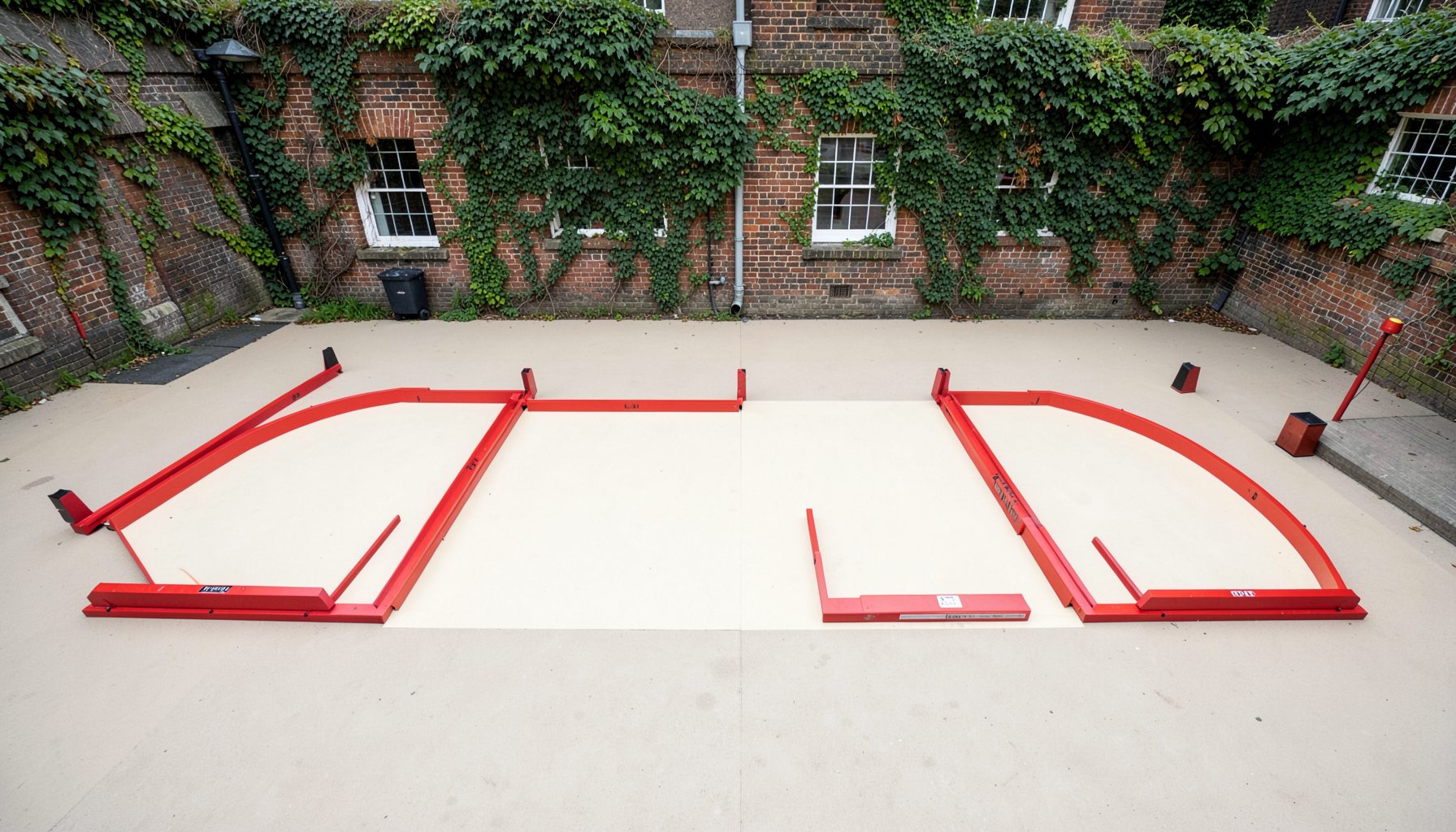
Rugby Fives developed at Rugby School in Warwickshire, where students played a handball game against the walls of the school buildings. Its name reflects that origin rather than a direct connection with modern rugby union. Players use their hands to strike a small ball against a front wall and side walls, relying on movement, touch, anticipation and tactical placement.
The game spread through schools and institutions that had links with Rugby School. Courts appeared in other parts of England, often within educational settings where old buildings and generous grounds made construction possible. This school-based foundation shaped the culture of Fives: discipline mattered, but so did courtesy, self-reliance and respect for opponents.
As more players began competing beyond their own schools, county representation became a natural development. Local networks provided a way to identify strong players, organise fixtures and give the sport a broader competitive identity.
The first county contests
The championship’s early records are generally associated with the interwar period, with the first recognised event commonly dated to 1929. At that time, Rugby Fives was played mainly by men connected with established schools and clubs. County teams gave experienced players an opportunity to meet regularly, compare standards and strengthen the sport’s competitive calendar.
The competition also helped preserve continuity. Fixtures created records of results, representative players and county performances, allowing later generations to see how the game had developed. In a sport with a relatively small playing population, that written history is especially important.
The Second World War interrupted many sporting programmes, including regular county activity. After the war, the championship formed part of the wider rebuilding of Rugby Fives. Clubs and schools had to restore courts, recruit players and re-establish fixtures. The return of county competition represented more than a sporting resumption; it showed that the community around the game had survived.
How county representation works
A county championship depends on selection as much as it depends on match day. Players are drawn from affiliated clubs, schools and local groups, with selectors considering ability, experience, reliability and the needs of the team. The strongest county side is not always a collection of the highest-ranked individuals. Balance, partnerships and adaptability can matter just as much.
The regulations and match arrangements have evolved over time, but the basic purpose remains stable: county teams meet in organised competition, with players contributing to a result that belongs to their wider local community. Individual skill is visible, yet every performance also reflects coaching, practice partners, organisers and the facilities that made preparation possible.
| Period | Character of the championship | Wider significance |
|---|---|---|
| Early years | A developing representative contest linked to schools and established clubs | Created a regular competitive identity for counties |
| Post-war decades | Re-established fixtures and strengthened local playing networks | Helped preserve the sport through social and sporting change |
| Late twentieth century | Greater organisation, wider club participation and improved records | Connected local competition with national administration |
| Modern era | More inclusive pathways, stronger event coordination and broader promotion | Supports participation, performance and the long-term health of Rugby Fives |
For someone familiar with Australian sport, the county structure can be compared with a representative pathway between club and national level. It is more local than a national championship and more formal than an ordinary club fixture. That middle ground is where many players find their most meaningful competitive experiences.
Changing opportunities for players
The history of the championship reflects wider changes in access to sport. Rugby Fives was once concentrated in a limited group of traditional schools and institutions. Over time, clubs, coaches and governing bodies worked to extend participation, improve information about the game and create more opportunities for players outside those original circles.
Women’s and girls’ participation has become an increasingly important part of the sport’s development. Representation must reflect the people who play, coach and volunteer today, rather than preserving an older image of the game. Inclusive coaching, accessible competitions and clear pathways help ensure that county competition remains relevant to the next generation.
This development has practical importance in Australia, where opportunities may be spread across a small number of schools, universities and specialist venues. A player in Melbourne or Sydney may need to travel for regular competition, while someone in Brisbane may first encounter Fives through a school link or a British sporting community. Strong national communication can help those players find one another.
The championship as a social network
A county weekend is more than a sequence of matches. Players travel, share accommodation or club facilities, meet opponents they may know only by reputation and renew friendships formed through previous seasons. Volunteers handle scheduling, scoring, transport and hospitality. These informal connections are part of the championship’s strength.
The same pattern appears in Australian community sport. A cricket club in Adelaide, a winter competition in Canberra or a school sporting association in Perth depends on people who give time away from playing. Rugby Fives has similar needs, although the smaller number of courts makes coordination particularly valuable.
The championship also brings together different generations. Experienced players can support newer competitors, while younger participants bring fresh energy and new expectations. This exchange keeps traditions alive without freezing the sport in the past.
Records, rankings and memory
Results and historical records give the Inter-Counties Championship a lasting shape. They show which counties have performed consistently, identify influential players and preserve milestones that might otherwise disappear from memory. Rankings and fixture records also help players understand where they stand within the national game.
Records should not be treated as decoration. They support selection, scheduling and fair competition, while giving clubs and schools a reason to celebrate their contribution. A result from decades ago can still encourage a current player who sees a former champion’s name connected with a familiar club or county.
For an organisation such as the Rugby Fives Association, maintaining this information is part of governing the sport. Archives connect championships, tournaments, coaching programmes and school initiatives into one continuous account of development.
A living part of the sport
The Inter-Counties Championship has lasted because it adapts while retaining its central purpose. Its identity comes from county pride, but its future depends on open participation, capable coaching and enough opportunities for players to progress. The competition must continue to serve both established performers and those discovering Rugby Fives for the first time.
That balance is relevant to the Australian market. Building a larger local base will require practical pathways through schools, universities, community clubs and existing racquet-sport networks. Demonstrations, introductory sessions and links with British expatriate communities could help raise awareness, particularly in cities where court access and travel already shape sporting choices.
The championship’s story therefore belongs to more than England’s historic counties. It illustrates how a specialist sport can grow through local commitment, careful administration and the willingness of players to represent something larger than themselves.
Explore the Rugby Fives Association’s fixtures, championships, coaching opportunities and historical records to discover where the county tradition is heading. Whether you are an experienced player, a school organiser, a coach or an Australian sports enthusiast looking for a distinctive new discipline, supporting the association helps keep the courts active and the next chapter of Rugby Fives in play.