



The Role of a Rugby Fives Referee at Tournaments
Rugby Fives, the 15-a-side rugby union code, is played on full-size fields and demands constant supervision of movement, contact and player welfare. At a tournament, the referee is more than the person with the whistle: they protect safety, apply the laws consistently and keep the contest moving while every team receives a fair go.
In Australia, where rugby league and small-sided versions are also familiar, event sheets should identify the 15-a-side code clearly. Tournament weekends commonly bring clubs, schools and community volunteers together at shared grounds. A Sydney or Melbourne carnival may use adjacent ovals, while a referee may cover several sequential fixtures in regional New South Wales or Queensland.
The Rugby Fives Association, the UK’s national governing body and a registered charity, promotes competitions, championships, tournaments, coaching, school programs and community outreach. Its model fits the Australian club network, where community tournaments often depend on volunteers sharing officiating, facilities and administrative tasks.
| Stage | Match referee | Tournament referee coordinator |
|---|---|---|
| Before play | Check laws, team sheets, pitch and equipment; brief captains | Appoint officials, publish the running order and confirm first-aid and emergency cover |
| During play | Apply the laws, manage set pieces, stoppages and sanctions | Monitor matches, cover gaps and liaise with venue and first-aid staff |
| After play | Complete the match record and report incidents | Consolidate reports, confirm results and identify training or safety needs |
Set the Tournament Up for Fair Play
Before the first match, the referee should know the latest laws, the tournament’s playing directives and any agreed procedures for cards, substitutions or contested decisions. A short briefing with captains prevents avoidable confusion, particularly when players have travelled from different clubs or states.
Venue checks matter just as much. At Australian suburban venues, grounds shared with cricket or Australian rules can carry extra markings, while movable posts, uneven grass or a hard run-off area create risks that players may not notice in a familiar club setting.
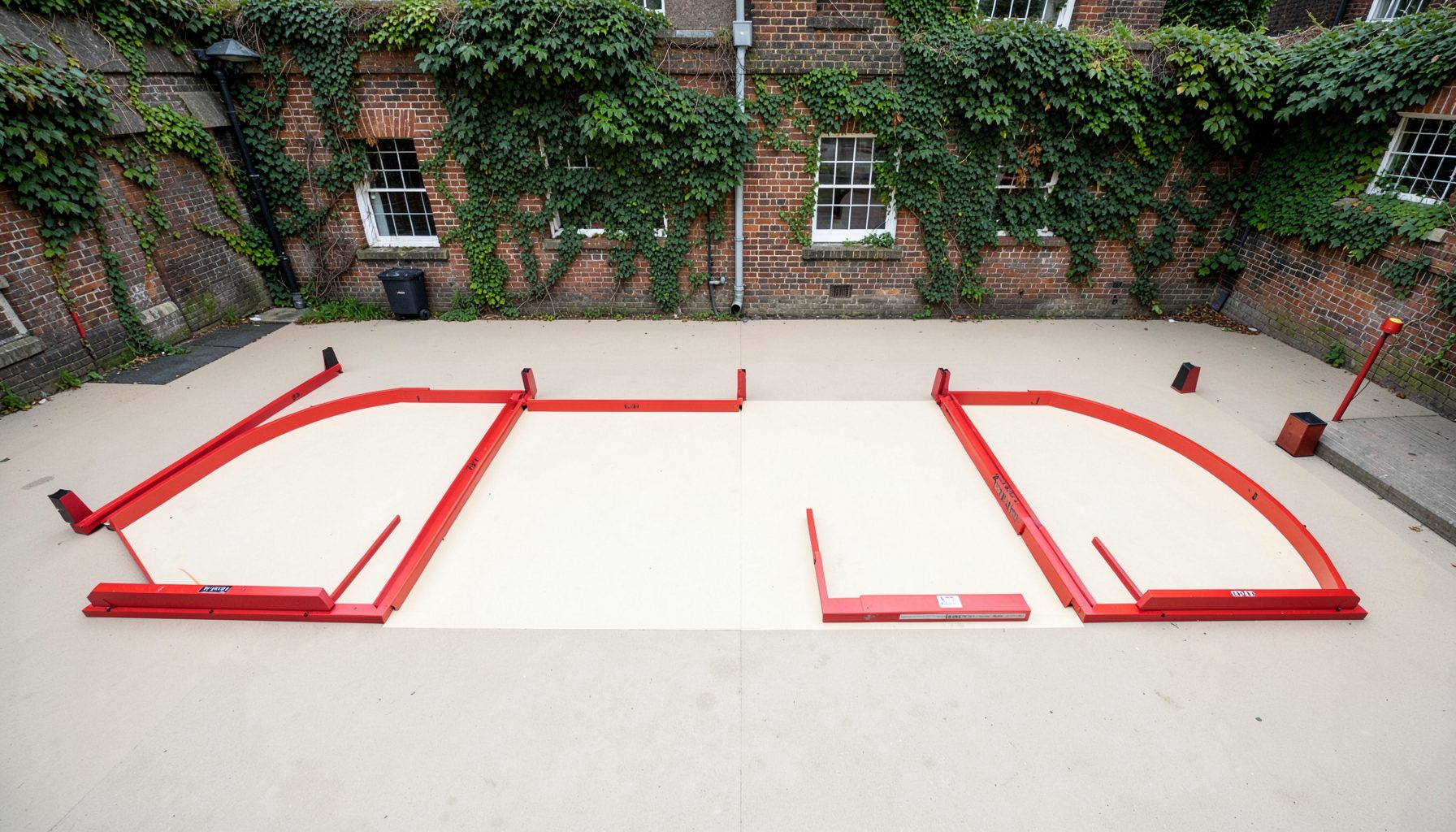
Reliable access to suitable venues is a participation issue, not merely an event-day concern. The Rugby Fives Association’s argument for school Rugby Fives courts highlights how good facilities support regular play, school programs and community outreach, giving organisers a sound basis for future planning.
Control the Contest Without Taking Over
The on-field official manages advantage, penalties, scrums, lineouts, restarts and foul play while also watching the wider picture for dangerous conduct. Clear, timely decisions allow players to prepare for the next phase rather than dwelling on a previous incident.
Australian competition culture is often direct but good-humoured. Phrases such as “good on you”, “fair go” and “no worries” can ease communication, provided the referee states what happened, what the law requires and what will happen next. Friendly delivery should never create uncertainty about a decision.
For a disputed ruling, invite the captain’s view, listen without debate and refer to the agreed tournament process when needed. If behaviour crosses into abuse or refusal to comply, use the stated card or removal procedure consistently and record the reason for the sanction.
Put Safety and Player Welfare First
A serious injury can turn a compact tournament schedule into a much longer day. The referee should know the first-aid location, emergency access point and procedure for contacting ambulances. Play should stop promptly when a player may have concussion, significant bleeding or another serious concern. The priority is removal from danger and care by qualified personnel, not an on-field diagnosis.
Weather adds another layer. Brisbane humidity, Melbourne summer heat, Sydney coastal rain and sudden Queensland storms can each affect a fixture, so organisers need agreed thresholds for hydration breaks, lightning suspension and delayed start times. Sunscreen, water and shade should be available rather than treated as optional extras.
Briefing teams before play should cover reporting head injuries, checking injured players and returning safely to the field. If the tournament uses volunteers without medical training, their role must be clearly limited so that nobody is asked to make decisions beyond their competence.
Coordinate the Wider Match Team
A match may involve a referee, touch judges where used, scorers, timekeepers, first aiders, grounds staff and a fixture runner, although the number of roles varies by event. The tournament referee coordinator must confirm who is present, explain each duty and ensure there is no gap around player safety or the scoreboard.
Australian club sport often depends on volunteers, and a friendly “good on you” culture is built on people stepping in when needed. A WhatsApp group can speed up urgent updates, but a printed match sheet, official running order and named contact list remain important when phones lose reception or signal near changing rooms.
Officials should also welcome players and volunteers from different backgrounds and abilities. A short orientation for school students, first-time volunteers and visitors from interstate or overseas reduces confusion and reinforces the inclusive standards expected across Rugby Fives events.
Protect Consistency and Competitive Balance
Tournament consistency begins with applying the same law interpretations from the opening game to the final, whether the teams represent established clubs, schools or sides drawn from the wider community. Referees should explain interpretations at the pre-match briefing, not change them according to the score or a team’s reputation.
Competitive balance also depends on impartiality. Familiarity with a player, coach or local club must not influence a ruling, and captains need a dependable route for raising concerns without escalating arguments on the field. Consistent card use and accurate match documentation give teams confidence that results reflect performance.
Those records matter beyond the field. The Rugby Fives Association maintains fixtures, rankings, results and historical records, illustrating the value of reliable administration. Australian tournaments can adopt the same discipline by completing reports promptly and preserving notes that support selection, safety reviews and future fixture planning.
Support Referees Between Tournaments
Referee development is continuous. Useful sessions cover law changes, match management, first-aid awareness, communication and the particular demands of rugby fives. Experienced referees can mentor newer volunteers through observation and structured feedback rather than leaving them to learn from one difficult match.
Officials who also play or coach need recovery time, especially across consecutive tournament days. Complementary movement and recovery guidance can support mobility, breathing and rest, while event organisers should still provide suitable breaks, food and a quiet place to reset between assignments.
A short debrief can reveal patterns that a final whistle cannot: repeated communication breakdowns, unclear rulings, unsafe crowd behaviour or equipment faults. Sharing those observations respectfully helps the whole team improve. Recognition from clubs and organisers also encourages volunteers to continue, which is particularly valuable in community tournaments where several people may fill several roles.
Volunteer for the Next Tournament
A Rugby Fives event needs more than players. Clubs and schools can strengthen their competition by supporting referees, touch judges, scorers, first aiders, fixture runners and people who manage equipment and results. Even a dependable beginner who follows the briefing can ease pressure on the officiating team.
Organisers can contact the Rugby Fives Association for resources on coaching, school engagement and community outreach while checking the relevant Australian state or national body for local registration requirements. The association’s status as a UK governing body and registered charity offers a practical model for clubs seeking sustained development rather than one-off events.
Register your interest with the Rugby Fives Association or your local club, complete available referee training and volunteer for a fixture. By combining sound law knowledge, calm communication and genuine care for every participant, you will help make every tournament safe, fair and welcoming.